Research Notes – The Great War (5) The Suicide Pact That Changed History

I’m researching The Great War for my current work in progress: a historical novel set during that time. To write the period accurately, I’ve been reading and studying the war and the surrounding events. I hope you find these bits of information as interesting as I do. ~ Meg

Nearly 120 years after his death, Crown Prince Rudolf of Austria, son of Franz Josef and Elisabeth (of Bavaria), heir to the throne of the Austro-Hungarian Empire is a mere asterisk in the history of the Great War. Nevertheless, his short but eventful life changed the face of the ruling Habsburg Dynasty and altered the path which led to the dreadful conflict 15 years after his tragic demise.

Rudolf Franz Karl Josef was born on August 21, 1858 and with his early education, began his grooming to lead the empire. Unlike his conservative father, Rudolf developed more liberal views and was intensely interested in the natural sciences, especially mineralogy. His marriage to Princess Stéphanie of Belgium was initially a happy match, but the royal couple grew distant after the birth of their only child, Elisabeth. Rudolf, a passionate man, began drinking and embarking on a number of love affairs. At one point, he considered trying to have his marriage to Stéphanie annulled, but was prevented by his father, the emperor.

In 1888, the 30 year old Crown Prince met the 17 year old Baroness Marie Vetsera and began a doomed affair. Although, by all accounts, Marie was devoted to her married lover, Rudolf carried on liaisons with other women during the 3 months he and Marie were involved. At Rudolf’s hunting lodge in Mayerling, on January 30, 1889, the lovers committed murder suicide –the act confirmed by letters of Marie’s which recorded that she was preparing to take her own life for the sake of ‘love’. Prior to the events at Mayerling, however, the ‘unbalanced’ Crown Prince had proposed a similar suicide pact to another of his mistresses, the actress, Mizzi Kaspar, who regarded the suggestion as a joke. Alas, in Vetsera he found a gullible and willing partner.

Rudolf’s death left Emperor Franz Josef without a direct heir. Franz Josef’s younger brother, Karl Ludwig became first in line to the throne, until his death of typhus in 1896. Karl Ludwig’s son Franz Ferdinand, the nephew of Emperor Franz Josef, now became the heir presumptive. That is until he was assassinated in June 1914 in Sarajevo –the spark that lit the fire of The Great War.

Header image credit: Fototeca Storica Nazionale; Crown Prince Rudolf image and Mary Vetsera image credits: WikiCommons.

Blurb – Take Two

I’ve made some changes to my blurb from earlier this morning. Here is the new version for your consideration followed by the original version for comparison. I hope my struggle will help new or first time writers see how this process goes. For the rest of you I thank you for your patience!

Breaking Bread, Book Five of The Bucks County Novels – synopsis version 2:

Maya Kaminsky’s dream of owning a French bakery cafe has finally been realized, despite the opposition of her rigid and narrow-minded family. But as the business grows and thrives, it becomes the target of vandalism —at first petty mischief which quickly escalates into dangerous sabotage. To complicate matters, Maya’s childhood friend, Brad Logan, moves back into town and with his recent inheritance, buys her building, intending to help her out. However, Maya is so used to relying on herself that it’s a struggle to accept help from anyone, let alone a man with whom she finds herself falling in love. Nevertheless, Maya will need all the help she can get to save both her business and her very life.

And the original version:

Maya Kaminski has achieved her dream of owning a French bakery cafe, even though her family opposed her every step of the way. It hasn’t been easy, but her hard work and dedication have paid off —the business is thriving and she’s slowly getting ahead. Just as things seem to be going her way, her childhood friend, Brad Logan, moves back into town and with his recent inheritance, buys Maya’s building, intending to help her out. However, Maya is so used to relying on herself that it’s a struggle to accept help from anyone, let alone a man with whom she finds herself falling in love. When the cafe comes under attack, first by what appears to be petty mischief but quickly escalates to dangerous sabotage, Maya will need all the help she can get to save her business and her life.

What do you think? Better or still needs work?

The Great War – Research Notes (3) Plan XVII

I’m researching The Great War for my current work in progress: a historical novel set during that time. To write the period accurately, I’ve been reading and studying the war and the surrounding events. I hope you find these bits of information as interesting as I do!

Like Germany, France had also designed a plan for war far in advance of the outbreak. Their vision was to be clouded by a thirst for revenge. They were still smarting from the loss of their territories in Alsace and Lorraine in the Franco-Prussian War of the 1870’s. And with their recovery in mind, the French committed to the doctrine of the all-out offensive.

In 1911, Plan 16 was adopted. It called for the build up of troops on the Eastern borders of France, quickly followed by a straightforward drive into the lost provinces. This strategy meant the armies would have to cross the Vosges Mountains of Eastern France. The mountains, while not particularly high, are rugged and rough, and at the time, lacked much in the way of communication facilities. It would not be easy country to traverse in the rapid attempt to gain territory.

One man recognized this problem –the new Commander in Chief of the French Army, General Victor Michel. He correctly predicted that a German offensive would come through Belgium, not through the Eastern mountains. He suggested that a new plan be devised that would take the French Army northwest into Belgium to counter the anticipated German move. He was promptly fired.

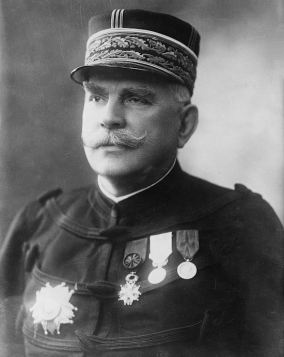
Michel was replaced by General Joseph Joffre, a large man whose best attributes were patience and a refusal to panic.

Photo_portrait_of_Gen_Joffre
General Joseph Joffre

His version of a plan for war was a modified version of Plan 16, dubbed Plan 17, and kept two armies in reserve to monitor the southern Belgian border. Despite taking a possible German incursion through Belgium into account, the French offensive would still proceed to march through Alsace-Lorraine.

Joffre had made several mistaken assumptions regarding the course of the war: he thought Russian operations would have greater impact, he thought Britain would offer more help at the outset than they did and most tragically, he assumed the Germans had far fewer troops than they did. In fact, despite the early hints that vast numbers of German troops were massing north of the Ardennes, Joffre stuck to his convictions that the enemy didn’t have the manpower to concentrate that far north.

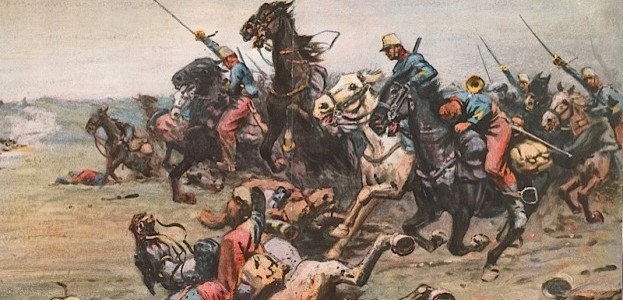
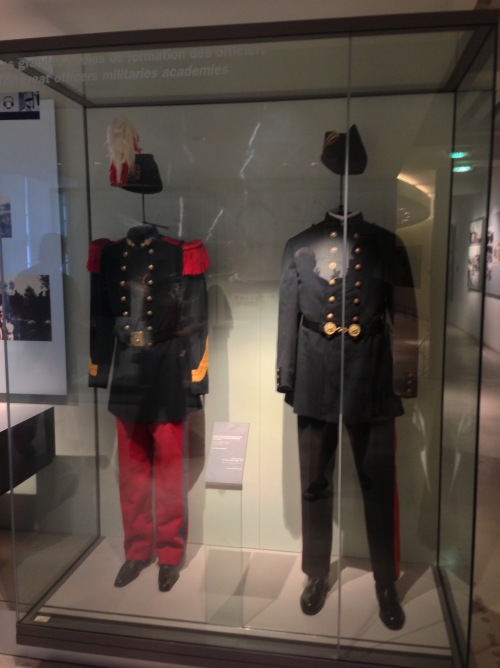
Thus it was that Plan 17 was put into action. On the Eastern offensive, the brightly uniformed French* –wearing the red trousers and navy overcoats of bygone days, their white-gloved officers with swords unsheathed leading the way– would sweep forward in long lines in perfect order. The German machine guns would open up and slaughter them.

img_0779
Photo my own – Paris Musee de Armie

This is a brief overview… there is so much more that happened in those opening days of war. I recommend for anyone interested: The Guns of August, by Barbara Tuchman and A Short History of World War I, by James L. Stokesbury. Header Image courtesy History Extra.

*The French quickly realized the folly of their hubris. Their traditional uniform had essentially put targets on their backs. The sky blue uniform which had been suggested in the years prior to the outbreak was rapidly adopted.