
Small Cuts (13) James

To find links to all parts of this story, please visit the Small Cuts Page. Now back to James.

My gaze shifted from my reflection in the rearview mirror as the car passing my house suddenly sped up. Could my eyes have been deceiving me? That looked just like Oliver’s car. I watched the driver turn the corner, barely pausing at he stop sign at the end of the block. With a second look, I was positive it was Oliver. And that could only mean one thing —he was coming to my house, while I wasn’t home, to be with my wife.  

I hit the gas and made the turn to follow him. I expected the silver Volvo to circle the block and return to my street but it continued out to the boulevard. What was Oliver up to? Maybe he saw me. I slowed and put some distance between us but not so much that I would lose him. 

At each intersection where he could make the turn to go back to my neighborhood, he continued on. This didn’t make any sense. If Oliver was heading into Center City —the way he appeared to be— there was absolutely no reason for him to have driven past my house. In fact, it was in the opposite direction from the route he should have taken from his own home. Once we were on the expressway, I had no way to easily turn around and so I figured on seeing this through. Perhaps when I discovered exactly where Oliver was going, his detour would be explained.

My initial reaction —shock and anger— had given way to confusion and doubt. Would Elaine really do this to me? Would Oliver? My wife and my best friend. This wasn’t the kind of thing I ever expected to happen to me. This happened to other people. I blew out a breath. Ok, maybe it wasn’t really happening. Oliver must have had some other reason to be on my street. He obviously wasn’t in a hurry. He’d been staying relatively close to the speed limit the whole way. Finally, he put his turn signal on and merged into the left lane to take the Vine Street Expressway. I stayed a few car lengths back. 

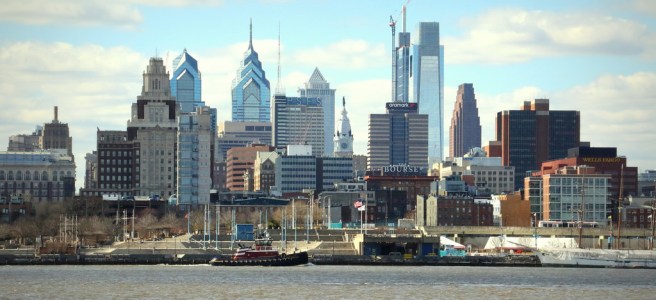
He took the first exit onto Broad street, heading south. This could get tricky. Following in city traffic was much more difficult than on the highway. Nevertheless, I managed to keep up as he wound his way over to Rittenhouse Square. I slowed as the silver Volvo pulled into the parking garage of The Park Hotel. A breakfast meeting? With a client maybe? Had to be. Although it still didn’t explain what he was doing driving past my house on the way. 

I glanced at the time. Damn. I was really going to be late for the golf outing. I would definitely miss the buffet breakfast but if I hurried, I could be there for tee time. I drove around the square planning to retrace my route and found myself in the wrong lane for the expressway. I passed the on ramp and merged into the right lane so I wouldn’t miss the next one. Of course, everything goes wrong when you’re already late. I took the next on ramp and immediately realized it was the eastbound expressway which would take me back to center city. Now I’d have to circle around a second time. I hit the gas and prepared to merge with traffic. I never saw the other car change lanes. 

Philadelphia Skyline Image via Flickr

Painting (15) Abstract Forest

I wanted to experiment with something a little different – an abstract piece. However, I didn’t want to just smear paint on canvas and call it a day. This will sound a little mad, but I dreamt about painting the night before and how it could be done. I started with an underpainting of unbleached titanium and a tiny bit of black which almost looked like aged stucco when I was finished. (I should have taken a photo, duh.)

Then I used three colors: Cadmium orange, Phthalo green and Dioxazine purple which I squeezed from the tube directly onto the canvas. Next I used a technique I learned from watching a video on how to paint like Willem de Kooning. (Not that this is in his style, but that I used a palette knife to remove paint and expose the underpainting in places.) This is the result:

In the Forest ~ acrylic on 16×20 canvas

Research Notes – The Great War (9) Patient Zero: The Spanish Flu

I’m researching The Great War for my current work in progress: a historical novel set partially during that time. To write the period accurately, I’ve been reading and studying the war and the surrounding events. Some of the older material I’m reposting in order to better organize it. This post from 2016, is especially important as the Spanish Flu will play a central role in the historical timeline. I hope you find it interesting and don’t mind me recycling! ~ Meg

The mysterious virus that emerged in 1917-1918 and reached pandemic proportions has a murky origin story. Smaller outbreaks had been occurring in the years leading up to 1918 but the flu wasn’t as severe in nature or as long in duration. People were getting over it within a few days to a week at most. The earliest and most authoritative report of the Spanish Flu comes from Haskell County, Kansas, USA. So why on earth was it called “Spanish” flu? More about that in a bit.

Fort Riley in Haskell County had been set up fifty years earlier to be a cavalry barracks during the Indian Wars. The fort was surrounded by rich farmland and sat near the confluence of two rivers. In the spring of 1917, when the USA decided to declare war on Germany, Fort Riley was hastily converted to a training facility. A large army encampment –Camp Funston–was constructed within the sprawling military reserve lands, to hold and prepare some 56,000 troops to go ‘over there.’

On March 4, 1918, Camp Funston’s cook, Albert Gitchell reported sick with a sore throat, fever and headache. He would have been up before dawn to prepare breakfast but after a restless night without sleep, he felt so unwell by morning that he reported to the camp’s infirmary. Gitchell is thought to be the great flu epidemic’s patient zero.

One after the other, men began reporting with similar symptoms. They were placed in isolation wards and the medic in charge informed his boss, chief medical officer, Colonel Edward Schreiner. By noon, 107 cases had reported and the fear of epidemic became real. By the end of the week, 522 cases had reported and by month’s end 1100 men had become incapacitated. Colonel Shreiner requisitioned a hangar to house the overflow from the overcrowded base hospital.

It soon became apparent that this was no ordinary flu. While most did recover, 48 men had died. The symptoms were alarming. The violent cough, projectile nose bleeds and the deathly blue discoloration of the face were not symptoms of the classic seasonal flu outbreaks. The medical staff realized they had something more deadly on their hands.

So why the “Spanish Flu” you might ask, when the origin was likely from the other side of the ocean? The flu was in fact, erupting all over Europe during the spring of 1918. However, the nations involved in the turmoil were reluctant to give publicity to the flu outbreak so as not to panic or further demoralize the already battered and war weary civilian population.

The sobriquet “Spanish” Flu became popular when the outbreak hit Madrid, Spain. Theaters, schools and tram service was curtailed to stop the spread of the disease. Most notably though was the contraction of the flu by King Alfonso XIII and members of his government. The Prime Minister and Finance Minister were both afflicted along with a third of the population of Spain. As a noncombatant country, the Spanish had no concerns about a ‘civilian scare’ and thus both foreign and domestic correspondents reported freely on the pandemic in that nation. Thus the virulent flu became known as “Spanish.”

Source material: Living With Enza – The Forgotten Story of Britain and the Great Flu Pandemic of 1918, by Mark Honigsbaum