The Great War – Research Notes (3) Plan XVII

I’m researching The Great War for my current work in progress: a historical novel set during that time. To write the period accurately, I’ve been reading and studying the war and the surrounding events. I hope you find these bits of information as interesting as I do!

Like Germany, France had also designed a plan for war far in advance of the outbreak. Their vision was to be clouded by a thirst for revenge. They were still smarting from the loss of their territories in Alsace and Lorraine in the Franco-Prussian War of the 1870’s. And with their recovery in mind, the French committed to the doctrine of the all-out offensive.

In 1911, Plan 16 was adopted. It called for the build up of troops on the Eastern borders of France, quickly followed by a straightforward drive into the lost provinces. This strategy meant the armies would have to cross the Vosges Mountains of Eastern France. The mountains, while not particularly high, are rugged and rough, and at the time, lacked much in the way of communication facilities. It would not be easy country to traverse in the rapid attempt to gain territory.

One man recognized this problem –the new Commander in Chief of the French Army, General Victor Michel. He correctly predicted that a German offensive would come through Belgium, not through the Eastern mountains. He suggested that a new plan be devised that would take the French Army northwest into Belgium to counter the anticipated German move. He was promptly fired.

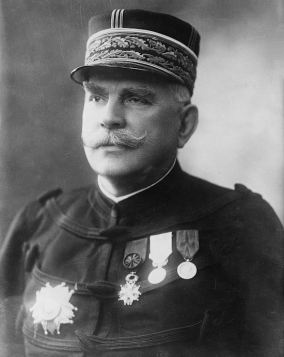
Michel was replaced by General Joseph Joffre, a large man whose best attributes were patience and a refusal to panic.
Photo_portrait_of_Gen_Joffre
General Joseph Joffre

His version of a plan for war was a modified version of Plan 16, dubbed Plan 17, and kept two armies in reserve to monitor the southern Belgian border. Despite taking a possible German incursion through Belgium into account, the French offensive would still proceed to march through Alsace-Lorraine.

Joffre had made several mistaken assumptions regarding the course of the war: he thought Russian operations would have greater impact, he thought Britain would offer more help at the outset than they did and most tragically, he assumed the Germans had far fewer troops than they did. In fact, despite the early hints that vast numbers of German troops were massing north of the Ardennes, Joffre stuck to his convictions that the enemy didn’t have the manpower to concentrate that far north.

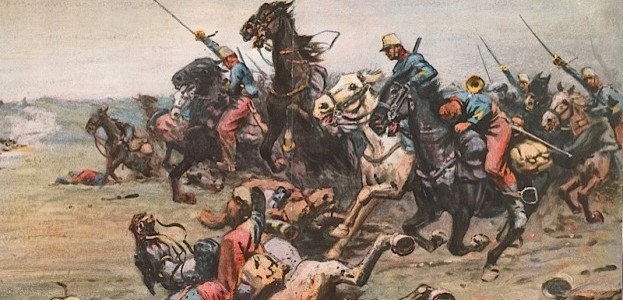
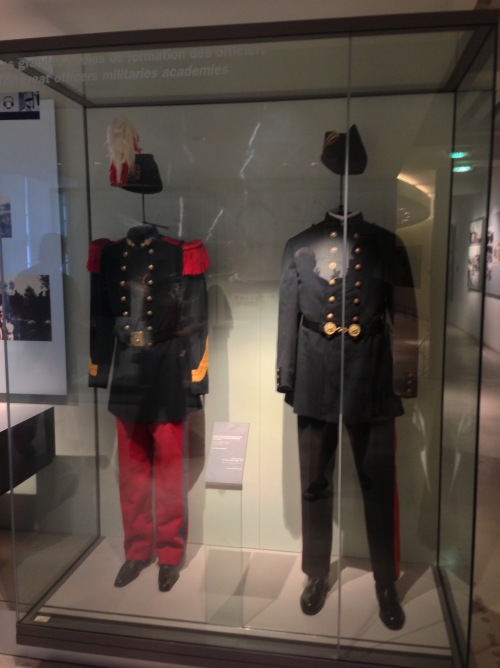
Thus it was that Plan 17 was put into action. On the Eastern offensive, the brightly uniformed French* –wearing the red trousers and navy overcoats of bygone days, their white-gloved officers with swords unsheathed leading the way– would sweep forward in long lines in perfect order. The German machine guns would open up and slaughter them.
img_0779
Photo my own – Paris Musee de Armie

This is a brief overview… there is so much more that happened in those opening days of war. I recommend for anyone interested: The Guns of August, by Barbara Tuchman and A Short History of World War I, by James L. Stokesbury. Header Image courtesy History Extra.

*The French quickly realized the folly of their hubris. Their traditional uniform had essentially put targets on their backs. The sky blue uniform which had been suggested in the years prior to the outbreak was rapidly adopted.

Foto Friday – #cyw Color Your World, week 3

Here are the colors for this week’s Color Your World Challenge by Tourmaline

I have resumed working on my novel Here Lies a Soldier – a story that is set in both modern day and in the time of the First World War. As I opened up the Pages file and dusted off my notebook, I was reminded of my 2013 trip to the Flanders region of Belgium – where many of the dreadful battles of The Great War were fought. Many of the fallen soldiers from both sides of the conflict are buried here. We visited two of the Commonwealth cemeteries just outside of Ypres and toured the ‘Flanders Fields War Museum’ -a very somber and moving experience. This week’s photos are from this trip.

1. Asparagus: the shade of the grass at Bedford House Cemetery outside of Ypres.

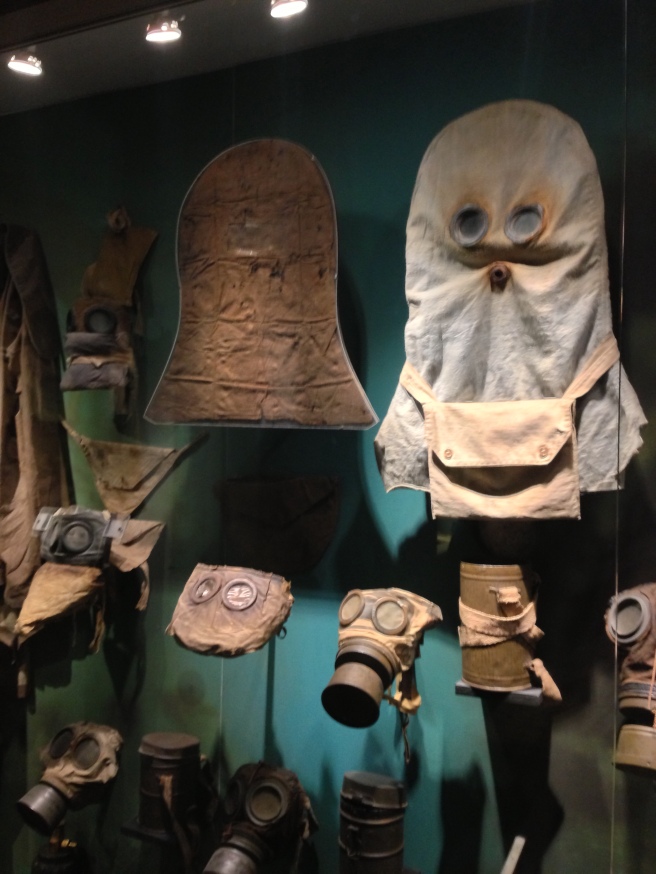
2. Aquamarine: the backdrop to a display of gas masks used during the Great War, In Flanders Fields Museum, Ypres (the color is a bit of a stretch, I admit…)

3. Gold: a chandelier in the lobby of our Brussels hotel

4. Chestnut: the door in the wall of Tyne Cot Cemetery outside Ypres

5. Plum: the coat of arms in the tap room of De Halve Man Brewery in Bruges

6. Manatee: the stone fountain Mannekin Pis in Brussels

7. Silver: the dome on the gateway of Tyne Cot Cemetery, outside Ypres.

The Spanish Flu of 1918- Research Discoveries

I’ve been researching for my story Here Lies a Soldier by reading as much as I reasonably can about the time period. Honestly, too much and I’d be ready to jump off a bridge… One part of the story involves The Spanish Flu Epidemic –albeit ever so peripherally– and I wanted to educate myself on the plague that killed some 50 million people worldwide in 1918, more than 10 times the number killed by The Great War.

Rather than ‘reinvent the wheel,’ pulling tidbits and random facts from all over the place, I am in the process of reading a book about the flu:  Living With Enza -The Forgotten Story Of Britain and the Great Flu Pandemic Of 1918.  IMG_3464

Thusly, the information I am going to share with you has been taken from this work. The author —Mark Honigsbaum— has compiled and sifted through a huge amount of data to write this book. Here are some of the things I found interesting and frankly, horrifying.

Some facts about influenza:

The term influenza most likely derives from the Italian phrase ‘influenzi coeli’ meaning ‘influence of the heavens.’ By the mid 18th century it was more common to hear the term, ‘influenzi di freddo’ or influence of the cold. It was in this sense that the term entered the English language in 1743.

Influenza viruses spread aerially, usually in small droplets expelled when someone coughs or sneezes, and tend to be more stable in cool dry conditions. Researchers have also discovered that at around 5 degrees C (41 degrees Fahrenheit) the virus transmits for about 2 days longer than at 20 degrees. A popular (and morbid) children’s rhyme of the time may actually be spot on. It goes like this:

I had a little bird
Its name was Enza
I opened the window
And in-flu-enza

The Spanish Flu in particular:

The Spanish Flu was so virulent because of its genetic makeup. There are 3 types of influenza viruses: A, B, and C. The B type produces classic winter flu while the C type rarely causes disease in humans. The A type, however, is the one responsible for the great pandemics of history. Because viruses are not cells, they do not have DNA to organize their replication. Rather, they use 8 delicate strands of RNA which codes for proteins and enzymes on the surface of the virus. Trouble arises during replication because the RNA cannot copy perfectly. Errors called ‘antigenic drift’ occur when the avian or swine strain of the virus is exchanging genes with the human host.  The result is a new subtype of the virus. Then once inside the new host, the 8 strands of RNA randomly shuffle, generating an entirely new virus for which the human immune system has no antibodies. With no defense, the virus can spread like a wild-fire.

The rate of mortality fell disproportionally on young adults, usually the least vulnerable of a population. The 1918 flu struck suddenly and without warning. One moment a person was up and about, the next day they would be lying incapacitated, coughing up greenish-yellow sputum. The final stage came when their lungs filled with fluid, prompting the heart to leach oxygen from the head and feet, resulting in a dark purple staining across the lips and cheeks of the victim.

Possible contributing factors:

The effects of gas attacks during the war.  Gasses like phosgene and chlorine were not only capable of disabling and killing on contact, they also acted as soil contaminants denying valuable ground to the enemy. In all, it is estimated that some 150,000 tons of poison gasses – the equivalent of a modern day supertanker – were dumped on the killing fields of Flanders and Northern France during the last 2 years of the war, saturating the soil to the point where it became impossible for attacking troops to hold territory without large numbers of men having to retreat to field hospitals with suppurating blisters, damaged lungs, and eyes.

The most mutagenic of all gasses – mustard gas – 12,000 tons of which was dumped on the Western Front in 1917, accounted for 400,000 casualties. According to John Oxford, Professor of virology at Queen Mary’s Medical School of London and military historian Douglas Gill: these agents may have prompted ‘stepwise mutational changes’ in the influenza virus. And in combination with the bitterly cold conditions that prevailed at the Western Front in the winter of 1917, and the stresses and strains of war, it is possible such contaminants would have lowered men’s resistance to the flu.

That is a lot of information and I’m only part way into this fascinating book. If this subject interests you at all, I recommend reading it. As I continue my research, I’ll share some more of what I learn along the way. Or if you think this is terribly boring, let me know in the comments!