
End Of Summer, End Of An Era

In two days time, I will close the doors on my chiropractic practice for good. The week leading up to the finale has been busy. On Friday, one of my first patients will be my last and she and I are going for lunch to celebrate. On September first, when people ask me what I do for work, I will tell them I am a writer.

Being a chiropractor for 23 years has helped me become a good writer of fiction. How is that possible? There are several ways:

  • I hear about people’s lives, their jobs, their families and what they like to do for fun. This gives me a deep reservoir to draw from in creating characters’ basic details.
  • Truth is really stranger than fiction. My patients all have stories to tell. Some of them give me ideas!
  • As a doctor working with people who are in pain, you learn to develop empathy, to stand in their shoes. This also helps develop characters. Especially, the villain of the story who a writer may not fully explore. But I have found that even the scoundrels have a reason for why they do what they do.
  • I have had to learn to be a good communicator. People in pain are emotional, scared and sometimes even angry. Being able to explain, console and reassure is absolutely vital on the patient’s first visit. Good communication means being concise, not muddying the waters with overly complex and/or technical terminology. This is also the goal of the writer. Unless of course you are writing a technical manual!
  • Last but not least, I have had to actually do some writing. I’ve written countless reports for insurance companies, attorneys and claims adjusters. You learn a certain writing style in composing letters and compiling examination findings. While this doesn’t translate directly to fiction writing, it does give you practice in consistency and flow.

I cannot say whether or not I will miss being a chiropractor. I can say that I am excited to begin the next chapter of life. After a little vacation planned for next week, I will return to my war story with renewed dedication this September. And I will work at it as my full time job.

Happy writing and productive editing!
Research Notes – The Great War (14) The Injured

My current work in progress is a historical novel set partly during the years of World War One. In order to write the time accurately, I’ve been reading and researching the subject extensively.

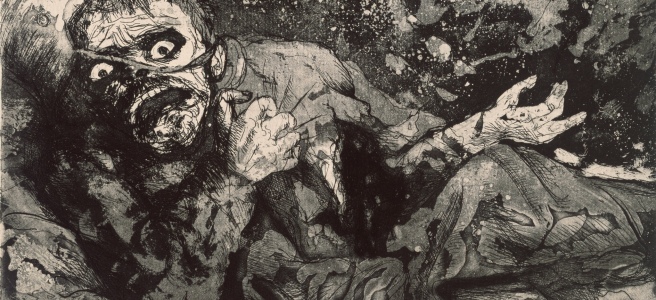
The casualty figures for this four year-long conflict are staggering. Forty million casualties, 15-19 million of which were deaths, 23 million wounded. But numbers, when they get too large tend to lose their meaning. When you put a face (literally) to the fallen, the injured, the mutilated, it has far more impact. These disfigurements to the face were especially cruel, changing the single most important way humans physically identify themselves; the way we recognize ourselves in the mirror and the way we present ourselves to the outside world.

The surgeons did their best to patch up these horrible wounds, but techniques were primitive and faces and bodies could never be returned to normal. The following short video tells the story of one woman who gave these men hope.

Header Image: The Wounded Soldier; Otto Dix 1916

Research Notes – The Great War (13) The American President Hesitates

My current work in progress is a historical novel partly set during the Great War. In order to write the time period accurately, I’ve been spending many hours reading and researching. I hope you find these bits of history as interesting as I do.

Woodrow Wilson became the 28th President of the United States in 1913, after serving as President of Princeton University from 1902 to 1910, and as Governor of New Jersey from 1911 to 1913. Despite being a politician from the Mid-Atlantic states, Wilson was born and spent his early years in Virginia and Georgia, during the time of slavery and The Civil War. The dreadful war that tore the United States asunder had a huge influence on Wilson’s reluctance to commit an American army to fight on foreign soil, even for their closest allies. Nevertheless, by 1916, the USA was neutral in name only.

The war was fought not just with guns and bullets, but with food, clothing and other supplies. Barbed-wire, for instance, had been invented as a means of corralling the huge herds of cattle in the American West. Now it was being used as an obstacle to the soldiers trying to cross the ‘No Man’s Land’ between the trenches on the Western Front. These goods had to be brought in by ship from noncombatant nations willing to supply either side.

From the outset of hostilities, the British had squeezed German supply lines with a naval blockade. The Germans responded with their own lethal weapon – the U-Boat, a shortening of ‘unterseeboot‘, literally ‘undersea boat’. This terrifying weapon would have shifted the balance to a greater degree except for one factor: America. The American President, Woodrow Wilson, had condemned the use of the U-boat against neutral nations and civilian vessels. Fearing American entry into the war, the German government complied. Unrestricted submarine warfare was off the table. When German military commanders reviewed the situation, they realized adhering to these demands was the only thing saving the British from disaster.

The German U-boats patrolling the trade routes found targets in civilian ships despite the rules to stay away. The merchant ships of Britain and France often disguised their ships with flags of neutral countries but often didn’t fool the U-boat commanders stalking them. In those days, submarine captains only had the use of the periscope to decide whether a ship could be targeted or not. There was no sonar, no radar; all information was gathered by eyesight. It could be very easy to make a mistake and the captains tended to err on the side of ‘shoot first, ask questions later’. As a result, passenger liners like the Lusitania had been sunk in 1915 to enormous outcry in the United States. The American President threatened but still kept the nation out of the war.

By 1916, the British blockade was beginning to deeply impact Germany’s ability to wage war and to feed and care for its citizens back home. The potentially game-changing U-boats were being held in check and only at the behest of the United States. German leaders were finding this policy more and more incomprehensible. What did the Germans have to fear from America, after all?

At the time of The Spanish-American War, American military strength peaked at 210,000 men. This was in 1898. By 1907, it had dwindled to a mere 64,000 men. The British had that many casualties on the first day of fighting in The Somme. By 1914, the U.S. army had swelled to 98,000 men with another 10,000 added by 1916. The Germans were not intimidated by a 110,000 man army, deficient in experience and in both weapons and material for fighting a modern war. Militarily, the Germans ranked the United States with Denmark, Chile and Holland.

So it was on January 31, 1917 that Germany decided they would be hamstrung no longer. The Imperial German Government notified the American President that they would begin unrestricted submarine warfare the following day.

Images courtesy Wikipedia and Wired.