
Research Notes – The Great War (13) The American President Hesitates

My current work in progress is a historical novel partly set during the Great War. In order to write the time period accurately, I’ve been spending many hours reading and researching. I hope you find these bits of history as interesting as I do.

Woodrow Wilson became the 28th President of the United States in 1913, after serving as President of Princeton University from 1902 to 1910, and as Governor of New Jersey from 1911 to 1913. Despite being a politician from the Mid-Atlantic states, Wilson was born and spent his early years in Virginia and Georgia, during the time of slavery and The Civil War. The dreadful war that tore the United States asunder had a huge influence on Wilson’s reluctance to commit an American army to fight on foreign soil, even for their closest allies. Nevertheless, by 1916, the USA was neutral in name only.

The war was fought not just with guns and bullets, but with food, clothing and other supplies. Barbed-wire, for instance, had been invented as a means of corralling the huge herds of cattle in the American West. Now it was being used as an obstacle to the soldiers trying to cross the ‘No Man’s Land’ between the trenches on the Western Front. These goods had to be brought in by ship from noncombatant nations willing to supply either side.

From the outset of hostilities, the British had squeezed German supply lines with a naval blockade. The Germans responded with their own lethal weapon – the U-Boat, a shortening of ‘unterseeboot‘, literally ‘undersea boat’. This terrifying weapon would have shifted the balance to a greater degree except for one factor: America. The American President, Woodrow Wilson, had condemned the use of the U-boat against neutral nations and civilian vessels. Fearing American entry into the war, the German government complied. Unrestricted submarine warfare was off the table. When German military commanders reviewed the situation, they realized adhering to these demands was the only thing saving the British from disaster.

The German U-boats patrolling the trade routes found targets in civilian ships despite the rules to stay away. The merchant ships of Britain and France often disguised their ships with flags of neutral countries but often didn’t fool the U-boat commanders stalking them. In those days, submarine captains only had the use of the periscope to decide whether a ship could be targeted or not. There was no sonar, no radar; all information was gathered by eyesight. It could be very easy to make a mistake and the captains tended to err on the side of ‘shoot first, ask questions later’. As a result, passenger liners like the Lusitania had been sunk in 1915 to enormous outcry in the United States. The American President threatened but still kept the nation out of the war.

By 1916, the British blockade was beginning to deeply impact Germany’s ability to wage war and to feed and care for its citizens back home. The potentially game-changing U-boats were being held in check and only at the behest of the United States. German leaders were finding this policy more and more incomprehensible. What did the Germans have to fear from America, after all?

At the time of The Spanish-American War, American military strength peaked at 210,000 men. This was in 1898. By 1907, it had dwindled to a mere 64,000 men. The British had that many casualties on the first day of fighting in The Somme. By 1914, the U.S. army had swelled to 98,000 men with another 10,000 added by 1916. The Germans were not intimidated by a 110,000 man army, deficient in experience and in both weapons and material for fighting a modern war. Militarily, the Germans ranked the United States with Denmark, Chile and Holland.

So it was on January 31, 1917 that Germany decided they would be hamstrung no longer. The Imperial German Government notified the American President that they would begin unrestricted submarine warfare the following day.

Images courtesy Wikipedia and Wired.
The Caretakers

Originally this story was meant to sequel a previous short story called “The Cafe” and ended up going in a completely unexpected direction. Since it stands quite well on its own, I’ve edited it a little and offer it to you today as I work on Small Cuts (Yes I’m back to it, so hopefully next Friday I will have it ready).

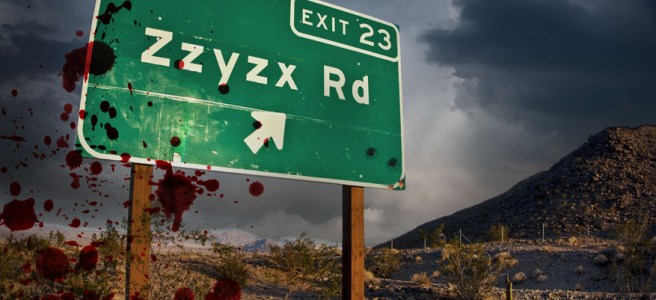
She took the documents from him and stared at the unusual name “Zzyzx.” She asked, “How does one even pronounce it?”

“I’m not sure. No one speaks the name. I’ve only seen it in writing,” he replied. “But however you say it, the job is mine. And…” he said, leaning in to kiss her softly. “We leave at the end of the week. Everything has been arranged. All we need is to take our personal belongings. The rest of it will be shipped for us.”

“The end of the week?” she gasped. “How on earth can I manage that?”

“Darling, just pack like you were going away for a few days. The movers will take care of what’s left.”

“All right,” she said.

They finished their lunch and kissed goodbye on the sidewalk. She hurried away beneath her red umbrella while he tried futilely to hail a cab. By the time he returned to his office, he was soaked and shivering. The air conditioning did nothing to improve his comfort and by the time he finally dried, he was chilled to the bone and aching.

He spent the afternoon putting his accounts in order to hand over to his replacement. His boss and his coworkers had wanted to take him out for drinks to give him a proper goodbye but his pain, exhaustion and the continuing foul weather dampened everyone’s enthusiasm. By the end of the day, all that was left to do was shake hands, accept hugs and once again brave the rain. He turned up his collar, hunched over his box of personal belongings and began the soggy, slow walk to his apartment.

She waited for him at the door with a towel and a cup of tea, both of which he gratefully accepted. The apartment looked like it had bit hit by a hurricane.

“I see you’ve been busy,” he said.

“Yes, but I just can’t decide what I need immediately and what can wait. As result, I’m afraid I’ve made a mess of things.”

He gazed at her lovingly. Her hair looked like she’d walked through a windstorm and her nose was smudged with dust. But she was beautiful and desirable and he wanted her more than anything in the world. “Come sit with me,” he said, gesturing to the sofa.

She complied. Taking his hand, she said, “Darling, you’re freezing. And you’re shaking!” She placed her warm hands around his and began rubbing them together.

He kissed her deeply, pulling her warm body against his cold chest. She wound her arms around him and sank into the kiss. “Let me…” she murmured against his lips as she pulled his shirt from his trousers.

Later, he lay in her arms, his head resting on her belly, while she stroked his still damp hair. He began to shiver again despite her warmth. “Darling,” she whispered as she curled herself into him, her back to his chest. She pulled his arms around her and the covers over both of them. He buried his face in her hair and inhaled the scent of her shampoo. Lilies. It only took moments for him to fall asleep.

***

The car came for them on Saturday morning. The driver, short, stout and of indeterminate middle age, rapped briskly on the door and then mutely nodded as they directed him toward their luggage. He didn’t speak any English —that was apparent when they tried to make small talk as he loaded their bags. They exchanged a look and got into the back seat. The rain had stopped but the skies remained grey and overcast. The air inside the car smelled as moldy and oppressive as a mausoleum.

The driver drove with purpose and soon left the city streets behind them. They snuggled close in the backseat more for comfort than warmth. She rested her head on his shoulder and soon drifted off to sleep. His own eyes began to grow heavy, and no matter how hard he tried he couldn’t stay awake.

It was dark on the road now. Her steady breathing let him know she slept on. They must have been on the road for hours. How had they both managed to sleep for so long? He kissed her forehead. “Darling. There’s my girl.”

“What time is it?” she asked with a yawn.

He looked at his watch and frowned. “I don’t know. My watch has stopped.” He tapped the driver on the shoulder. “Excuse me… What time is it? Do you know?”

The driver shook his head. He tried again. “Wie spät es?”

The driver held up five fingers.

“Five?” she asked. “But that means we’ve slept for eight hours! How is that possible?”

A finger of anxiety stroked the back of his neck. Could it be that the strange musty odor overcame them? He didn’t want her to worry. “I don’t know, darling. We must have needed it.”

The road was desolate, running alongside miles of empty desert on one side and butting up against a slope on the other. If they were gaining or losing altitude he couldn’t tell. The website and the paperwork he had filled out had indicated that the resort was isolated. His expectations had not met with this reality, however. He began to lose track of the turns as they made them and it now seemed that surely they had driven in a circle once if not twice and yet the landscape was such that he couldn’t have picked out a distinguishing feature to identify even if he’d been able to see in the increasing darkness.

The pavement became dirt. The dirt became ruts and finally the car stopped at two iron gates standing open. A sign in Gothic script read “Zzyzx” on the gatepost to the left. The rutted track disappeared over a rise but a faint light from beyond gave evidence of habitation nearby. The driver unloaded the luggage from the trunk and set it down as the couple climbed from the back seat.

“Gehen,” the driver said, pointing toward the light. “Keine autos.” And he returned to the car, carefully maneuvered on the narrow path and returned the way they had come.

She shuddered. “I don’t like this.”

“It’s all right. The resort isn’t officially open yet, only the old caretakers live here. This is probably the way the construction workers come and go.” He pointed. “Look, it can’t be far. I’ll carry the big bags if you can handle the smaller ones.”

They set off toward the glow on the horizon, the only sounds the crunching of the dirt beneath their shoes. There was no breeze stirring nor animal sounds, not even the hum of insects. It felt wrong to talk so they remained silent as they walked. She kept turning around to look back at the gates until finally they were swallowed up by the night. The only thing to do was press on.

They passed the rusted hulk of an old motor vehicle. A Land Rover. He hadn’t seen one of those in years.

“It can’t be much further, now,” he said more brightly than he felt. Her beautiful eyes were wide with apprehension and she was struggling with the bags. “Here, my love.” He took one of them and tucked it under his arm.

Ahead in the half light, a structure low and squat appeared before them. Windows in the building were brightly lit. “Oh thank god,” she sighed. With signs of human habitation finally before them, they picked up the pace. They were disappointed to see that the structure was a aged mobile home. “Oh no. What is this?”

“Don’t panic, love. This might just be a construction trailer. Perhaps this is where they are waiting to take us on to the hotel.”

He stepped up to the sagging door and knocked. Within, came the sound of heels clicking on a hard surface and the door cracked open with a creak. A dignified elderly woman peeked out.

“Er, hello. I’m Angelo and this is my wife Christine. We’re…”

“The new caretakers,” she said. “Come in and meet my husband, Christopher. We’ve been waiting for you.”

As they stepped through the door, they left the desolation outside and entered the opulent foyer of The Grand Soda Springs Hotel and Resort.

Research Notes – The Great War (12) Passchendaele 1917

My current work in progress is a historical novel partly set during the Great War. In order to write the time period accurately, I’ve been spending many hours reading and researching. One of my characters will be in the mud of Passchendaele in 1917. I visited the area in 2013. It is still chilling to think of the horrors that the soldiers endured.

The stalemate along the Western Front in 1917 looked like it might finally be breaking, with successes by British and Canadian forces in taking Messines and Vimy Ridges, respectively. The German salient had been pushed back and the plans to break the line were being formulated. The forthcoming battle would officially be known as the Third Battle of Ypres, but would be more famously known as The Battle of Passhendaele, after the little village a few miles to the east of the site.

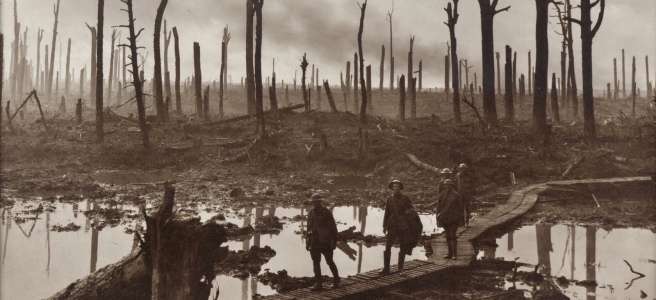
The area from Ypres to Passchendaele slopes continuously uphill—not an ideal way for the British to forge into battle. Even the soil around the area was about to become an obstacle. It had the consistency of clay—dense and heavy and prone to holding water. Before the war, the farmers who worked this land had needed to build up an elaborate drainage system to draw off the water during the rainy season. The battles fought in the area over the course of the war had demolished this fragile system, with the result that rain-soaked fields would become mires of thick, clinging mud. The success of the British advance in the Third Battle of Ypres was dependent on the weather cooperating.

June 1917 proved to be a good month for getting ready. In July the weather was for the most part agreeable, and the gun batteries came forward and took up their positions. The standard means of attack was to use heavy artillery to bombard the enemy in their trenches and then to send infantry ‘over the top’ to fight man to man. The initial bombardment could go on for weeks at a time, rendering the field into which the soldiers would follow a nightmare landscape of craters, rubble and ash. Though this approach had so far not proven to be an effective method, the generals were still enthralled by the idea of ‘more’ —more artillery cannons, more guns, more men, and not to mention, more casualties.

Airplanes had become a means of reconnaissance and the reports brought back by the pilots stated that the German morale was low and conditions looked good for an attack. However, British intelligence-gathering during the war was neither very objective nor accurate. The spies were told what the commanders hoped was true, and the spies basically confirmed that it was.

The artillery began raining death on July 18th, with the infantry attack scheduled to begin on July 31st. But as the shriek and blast of the heavy mortars went on for those two weeks, the weather began to turn. At first, occasional heavy rains filled the myriad shell holes littering the fields and due to the poor drainage, they remained that way. Still, on that last day of July 1917, the men crawled from the trenches at day break, carrying 60-80 pounds of gear on their backs and began to advance. They made two miles by nightfall and considered it a good start.

The next day, the first of August, it began to rain in earnest. This was no summer shower; it was a steady, soaking, continuous downpour. It rained for two weeks straight. The already saturated soil began to dissolve. The shell holes filled and the engineers tried to build up wooden walkways around them. The soldiers were slipping in the mud, falling in, and with their heavy packs weighing them down, drowning. The boards laid down to create footing were little better. In the rain, they became slick so that the soldiers had to tread carefully. The Germans shot the slow moving infantrymen off the boards, they fell in the mud and drowned.

August gave way to September and still the rain fell. Despite all this misery, the attack went on and finally Canadian troops took and held the village of Passchendaele. The advance on the Ypres Salient had gained the British four miles at the cost of a quarter million men.

British military historian Basil Liddell Hart relates the story of a staff officer who visited the battlefield after the fact. As he gazed out at the sea of mud, he said, “My God, did we send men to advance in that?” He then broke down and wept as his escort led him away.

There would never be another battle like Passchendaele. F. Scott Fitzgerald wrote in Tender Is the Night that battles like those fought on the Western Front could never be fought again:

“See that little stream we could walk to it in two minutes. It took the British a month to walk to it a whole empire walking very slowly, dying in front and pushing forward behind. And another empire walked very slowly backward a few inches a day, leaving the dead like a million bloody rugs. No Europeans will ever do that again in this generation. …This took religion and years of plenty and tremendous sureties and the exact relation that existed between the classes.”

He meant the only people that could fight that sort of battle were those who possessed a sure faith in their countries, their institutions, and their own unquestioned value systems. Only that kind of faith and confidence could prepare men sufficiently to endure the hell of such battles. Men like that were now gone: rotting in the fields of Belgium and France or if they lived, no longer in possession of such faith.

Nevertheless, the war itself had another year to run. New methods and new weapons were about to change the practice of war forever.

Images courtesy: Canadian War Museum, The Times of London, The Spectator, and Wikipedia