Ch-ch-ch-changes…

Turn and face the strange. Or in this case the mistakes and awkward bits of my first draft.

I've done the first reread of Breaking Bread. Next comes the rewrite in which I have two major changes. For one, I'm adding a scene I left out that will explain some of the extreme hostility of Maya's mother. That part of the conclusion is thin and it needs a few paragraphs to flesh it out.

The other change is this: Kiki Curtis-Stevens. It's not that I don't like the name, I do. But… Kiki is my niece Kathleen's nickname. Fortunately, she doesn't read my blog. I think. When I first wrote the character, 'Kiki' just popped into my head and I went with it. Honestly, I never intended to use the name all through the book, I just never came up with anything better. But I don't want the criminal to be named after my niece!

I gave Kiki the full name of Katerine, the Italian version of Katharine, so one possibility is to call her Trina Curtis-Stevens instead. That works pretty well except that it sounds very similar to Tanya. Trina and Tanya. Tanya and Trina. Close enough be confusing. So now I'm thinking about changing Tanya's name as well. I named one of their cousins Stacia and I might swap their names since the cousin has no role in the story other than being mentioned. Aren't you glad you don't have to read this story again?

Just a side note: I mentioned to a few of you that I considered an evil alternative ending:

When they discover that Tanya has been paid twenty-five thousand dollars to sabotage Maya's cafe? The financier is really Brad. An obsessed Brad who only sees the cafe as an impediment to getting what he really wants: Maya. In this scenario, Brad gets increasingly jealous and possessive which results in driving her closer to Juan Paolo and that in turn triggers violence against JP, etc, etc…  (I hadn't worked all of it out, obviously…) Any of you who read Book 2: Seeing Red will get the connection here to Brad's half brother Ethan, the football player/stalker. So I figured I already wrote that story in Seeing Red. Still, it would have been fun! And unexpected I think.

Ok, back to work…

Header Image: Ian Cleary
Preparations For War: Plan XVII

Like Germany, France had also designed a plan for war far in advance of the outbreak. Their vision was to be clouded by a thirst for revenge. They were still smarting from the loss of their territories in Alsace and Lorraine in the Franco-Prussian War of the 1870’s. And with their recovery in mind, the French committed to the doctrine of the all-out offensive.

In 1911, Plan 16 was adopted. It called for the build up of troops on the Eastern borders of France, quickly followed by a straighforward drive into the lost provinces. This strategy meant the armies would have to cross the Vosges Mountains of Eastern France. The mountains, while not particularly high, are rugged and rough, and at the time, lacked much in the way of communication facilities. It would not be easy country to traverse in the rapid attempt to gain territory.

One man recognized this problem –the new Commander in Chief of the French Army, General Victor Michel. He correctly predicted that a German offensive would come through Belgium, not through the Eastern mountains. He suggested that a new plan be devised that would take the French Army northwest into Belgium to counter the anticipated German move. He was promptly fired.

Michel was replaced by General Joseph Joffre, a large man whose best attributes were patience and a refusal to panic.

220px-Joseph_Joffre
Joseph Joffre via wikipedia

His version of a plan for war was a modified version of Plan 16, dubbed Plan 17, and kept two armies in reserve to monitor the southern Belgian border. Despite taking a possible German incursion through Belgium into account, the French offensive would still proceed to march through Alsace-Lorraine.

Joffre had made several mistaken assumptions regarding the course of the war: he thought Russian operations would have greater impact, he thought Britain would offer more help at the outset than they did and most tragically, he assumed the Germans had far fewer troops than they did. In fact, despite the early hints that vast numbers of German troops were massing north of the Ardennes, Joffre stuck to his convictions that the enemy didn’t have the manpower to concentrate that far north.

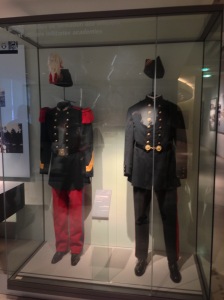
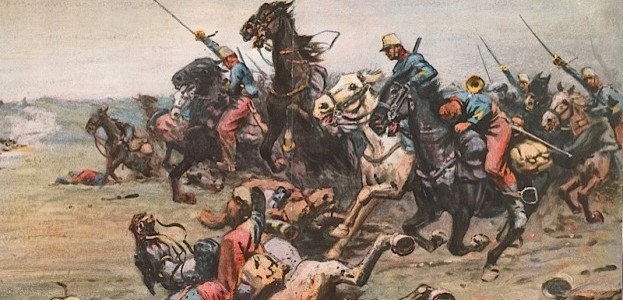
Thus it was that Plan 17 was put into action. On the Eastern offensive, the brightly uniformed French* –wearing the red trousers and navy overcoats of bygone days, their white-gloved officers with swords unsheathed leading the way– would sweep forward in long lines in perfect order. The German machine guns would open up and slaughter them.

img_0779
Photo my own – Paris Musee de Armie

This is a brief overview… there is so much more that happened in those opening days of war. I recommend for anyone interested: The Guns of August, by Barbara Tuchman and A Short History of World War I, by James L. Stokesbury. Header Image courtesy History Extra.

*The French quickly realized the folly of their hubris. Their traditional uniform had essentially put targets on their backs. The sky blue uniform which had been suggested in the years prior to the outbreak was rapidly adopted.

Going Pro Versus Going It Alone

Adventures in editing.

As I begin editing Breaking Bread, I can’t help but think about how I fumbled through the process with Book One: Three Empty Frames. As a first time, unpublished author, I didn’t feel I had the luxury of hiring a professional editor. Professional editing can get expensive. Depending on the length of your document and the level of editing you choose, it can cost several hundred to several thousand dollars. And though I knew an editor could take a good manuscript and make it great, I just couldn’t bring myself to do it.

Nevertheless, I wasn’t so naive as to think I could do this alone. I had to get objective feedback before I published the book. Sure I loved the story, the couple of friends I let read it were enthusiastic about it too. But kind words from a few people close to me were not going to be enough. I needed beta readers: non-professional readers who will carefully read your manuscript with an eye to finding plot holes, disruptions in continuity, grammar and spelling mistakes and possibly highlighting aspects of the story that might be unbelievable.

When choosing beta readers, make sure they aren’t just going to tell you what you want to hear because they don’t want to hurt your feelings. You NEED constructive criticism. That’s why your mom and dad, husband or wife, or beloved aunt are not the best choices. So what now? Are you in a book club? Ask your group to beta read for you. How about an online writer’s group? Other writers are usually willing to help you out. Ask your blogging friends here on WordPress to read for you. Just be sure to choose people who will give you an honest opinion and some thoughtful feedback. Make sure to attach a copyright warning to anything you send out, too.

And for heaven’s sake don’t be thin skinned! Take the feedback and learn from it.

At the time I had completed Three Empty Frames, I belonged to a book club and asked some of the other members to read for me. Even though the group has since broken up, I can still count on the same folks to read my unpublished work. I also recruited my friend Brett, who is an English teacher to read it. I know I said don’t ask your friends, however, I know the teacher in him won’t let me put a foot wrong. If you have kids in school, perhaps you could approach their English teachers for help. But maybe wait until summer…

These days, I do use a professional editor. Formerly of Simon and Schuster in New York, my editor Kevin (now good friend) quit the rat race and works for himself. Often, he comes over with his wife and baby and hangs out with me in the pool. I ply him with beer and pick his brain. I have him cleaning up my first two books, the ones I published without professional help. Why do that? Because when I publish Breaking Bread, one of the older books might be part of a deal to market the new novel. I want it to be the best it can possibly be. The point in telling you all of this is that in handing Kevin my older work, his feedback assured me that I and my beta team had done a good job. The manuscript was ‘very clean’ in his words.

So for you first time writers, if you are meticulous with your process, AND if you find people with sharp eyes to spot your mistakes, give you good insights, and offer constructive criticism, you may be able to forgo the services of a professional editor.