Once again, my comments might possibly be landing in your spam folders. Sandra found me in hers. Ah, so frustrating…
Have a happy Friday, darlings! 
All my creative pursuits.

Once again, my comments might possibly be landing in your spam folders. Sandra found me in hers. Ah, so frustrating…
Have a happy Friday, darlings!
From Galway stone, Yeats made a monumental poetic symbol. “I declare this tower is my symbol,” he said.
Ballylee Castle, a 14th century Norman stronghold had fallen into disrepair and disuse by the time Yeats stumbled upon the structure. He took note of it because of its proximity to the beautiful Mary Hynes, who lived nearby. When on the verge of marriage to Georgie Hyde-Lees, Yeats cast about for a place to settle and recalled the abandoned tower, now in the possession of the Congressional District Board. An additional draw was its nearness to the home of his benefactor, Lady Isabella Augusta Gregory.

“I the poet William Yeats,
With common sedge and sea green slates
And smithy work from the Gort forge
Restored the tower for my wife, George
And on my heirs, I lay a curse
If they should alter for the worse,
From fashion or an empty mind
What Raftery built and Scott designed…”
This poem changed as plans were thwarted… The rats got at the dry thatch, for example. So “common sedge” became “old mill boards” and no longer “laying a curse” the poem turned fatalistic:
“And may these characters remain,
When all is ruin once again.”
The Yeats family spent summers here until 1929. The space inspired much of Yeats’ poetry from that time:
The winding stair:

Yeats’ desk at which he composed “A Prayer For My Daughter” while George was giving birth to her in their nearby bedroom:

And the stream which ran beside the the tower, into which George would drop a fishing line from the window.

His wife, George is a very intriguing lady… She married Yeats in 1917, when she was 25 and the poet was 52. Georgie was intelligent, educated and well versed in occult studies. George’s previously undiscovered “ability” at automatic writing was revealed during the couple’s honeymoon. She felt that she was the medium through which the writing emerged. This automatic script continued for more than two years. At times it was intense, coming forth in various forms. The writing centered on the symbolism of the sun and moon – ideas so exciting that Yeats immediately made plans to publish. The end result was “A Vision” – published in 1925.
Married life somewhat settled the poet – a man who to this point had been consumed with unrequited love for his muse Maud Gonne. Maud was actually one of nine of Yeats’ muses. In his book, “W.B. Yeats and the Muses,” Joseph M. Hassett explains;
“from the outset of his career Yeats was convinced that art at its most sublime springs from the influx of a supernal form of knowledge far beyond the realm of ordinary discourse. In following this belief Yeats was predisposed to accept the Greek idea that poetry is inspired by the Muses, as expressed in Plato’s dictum that “all good poets…compose their beautiful poems not by art [techne] but because they are inspired and possessed” by the Muse who speaks through them…
Yeats’ wife Georgie, bore him two children – a daughter, Anne and a son -Michael. After the birth of Michael the automatic writing seems to have ceased and with it, Georgie’s interest in sex. And as you can imagine, the passionate poet once again had other women in his life – a situation, George seemed to tolerate. At the time of his death in France in 1939, his last muse – Edith Shackleton-Heald, was beside him along with Georgie.

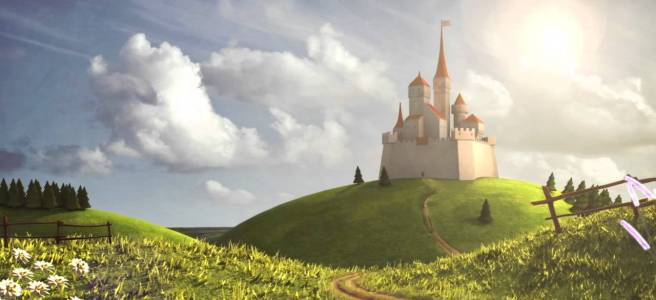
A long time ago, there lived a beautiful young woman, Bega – the virgin daughter of Bran, a powerful Irish King- whose beauty and fine reputation had become famous in the land. In order to seal a treaty with the neighboring king, Bega’s father promised her in marriage to the other king’s son. Now this son -Corban- was much older than Bega. He was known to be a drunkard and a glutton. He was cruel in his treatment of his servants, his horses and his dogs. However, for many years, the two kingdoms had been at war and at long last, there was a chance to make peace.
A great feast was held at King Bran’s castle to celebrate the treaty and to introduce the betrothed to one another. When Bega was presented to her future husband, he leered at her, he licked his lips provocatively and he squeezed her breasts as if he was choosing ripe fruit. Bega was terrified and her father, King Bran, was none too pleased either. However, a deal was a deal and if the exhausted lands were spared from further battle, it would be worth the price.
The night before her wedding, the fairies heard Bega weeping at her window and they decided to take pity on her. The fair folk had been friends for many years with the first men and women who came to settle in their realm, but they were no friends of the rival king and his wicked son. Their leader, Roslyn, approached Bega with a plan. Three of the fairies were sent to put the guards of the castle to sleep with a draught of drugged ale, three more were sent to fool Corban’s father into signing the treaty without the payment of the maiden as a condition, and a final three -including Roslyn, herself- spirited Bega away from the castle and her fate.
Over the green fields, over the hills and valleys, the fairies rode with Bega in their care. When they reached the seashore, Roslyn called a great sea monster from the depths to carry Bega to the Eastern Isles. For the fairies had allies in the kingdom of Cymru and had a friend in their great king -Emrys. Ahead of the sea monster, the fairies sent a gull to carry a message to Emrys, asking him to keep the maiden safely hidden from cruel Prince Corban. With tears of relief and thanks, Bega bid her friends goodbye and climbed on the back of her conveyance.
Three days later, she arrived on the shores of Cymru, tired and hungry but safe and well. As the sea monster departed, a group of mounted men approached from inland. The tallest of the men dismounted and came to her. He was handsome and well dressed, with a neatly trimmed beard, straight teeth and clear blue eyes. He smiled and held out his hand to Bega who until this point had kept her face lowered in respect. However, when she raised her eyes to the handsome stranger, he immediately saw how beautiful she was, despite her fatigue and disarray.
“My lord,” she said, humbly. “I am Bega. I’ve fled from my home in Ireland to escape a most terrible fate. If you would be so kind to take me into your care, I will gratefully become the lowest of the serving women in your household. Only do not send me back home, for I would rather die.”
King Emrys smiled and lifted her to her feet. “I’ll do better than that, maiden. My friends the fairies have told me all about you, all your good qualities –your virtue, your kindness and charity. At their good report, I swear I had fallen in love with you already. And so I was prepared to ask for your hand in marriage. Now if you would have me, I see that I would be rewarded with your beauty as well. What do you say? Do you think you could love a man like me?”
At his words, Bega began to weep again and Emrys was troubled. “I have gone too far,” he said miserably.
“No, my lord. These are tears of joy I weep, for you make me a happy woman this day. Your friends are my friends, as well. And if they trusted me to your care, then I am sure that I could love you. I will gladly be your wife.”
At these words, Emrys embraced her, sealing their promise with a kiss of true love. He then lifted her onto his horse and carried her back to his castle to rest and recover from her ordeal.
Preparations for the royal wedding were immediately begun. Bega was bathed and clothed in a fine silk gown and jeweled with precious gems given to her by the dowager queen -Emrys’ own mother. Her maid servants wove flowers into her hair and rubbed oils into her already flawless skin. Within a fortnight of her arrival, King Emrys and Queen Bega were married and settled into courtly life.
Meanwhile, when Bega had been discovered missing, Corban had wanted to go to war against her father, King Bran. His own father produced the signed treaty with the alteration removing the condition of marriage. At the sight of it, Corban flew into such a rage that his heart, weakened by his gluttony and drunkenness, burst on the spot and he died.
 Meg Sorick, Author/Artist