
The Bucks County Novels – by Margaret Sorick

Once a year (yes, I’m terrible at marketing…) I like to remind my followers that I have a series of novels available for purchase on Amazon. The novels are set in Bucks County, Pennsylvania, where I live. My characters are ordinary people with families, people who fall in love and sometimes find themselves in outrageous circumstances. While the same cast of characters appears in each of the books, the plot focuses on a different one every time. The first  novel in the series: Three Empty Frames won first prize in The Writer’s Digest E-book Awards for Mainstream Fiction in 2017. Here is a look at each one of them:

Three Empty Frames  – Book OneThree Empty Frames_02_HR_front_2

Life just got complicated for Jennifer Dunne. Her dead mother’s diary has revealed clues to a famous art heist from the 1960s. Have the missing masterpieces been hidden among her things all this time? Jen is targeted by a pair of ruthless criminals who certainly think so. Meanwhile, she’s falling in love with her new lawyer, who works with her to unravel the clues. But will the fledgling relationship survive when another handsome rival appears on the scene? And have the clues to the whereabouts of the missing masterpieces led them astray? Were the paintings hidden in plain sight all along?

Seeing Red – Book Two 514HE57Sz1L

Beautiful, hardworking, Desdemona Murray doesn’t see herself the way others do. She only remembers the awkward teenager she once was. The talented landscape designer is hired to install a custom deck at the home of star football player, Ethan Samuels. When she catches the eye of the handsome professional athlete, and he begins to pursue her relentlessly, she is at first, flattered and amazed. However, her heart belongs to a man whom she believes only considers her a friend. Adam Quinn has always been a ladies man, not one to settle down, or so she thinks. Little does she know his feelings for her run much deeper. When Des finally sees both men for who they really are, the choice she must make is obvious. But when she chooses, Des finds out how dangerous it can be to break free from a man who can’t take no for an answer.

Run For It – Book Three fullsizeoutput_cc7

Joni Cooper is in the best shape of her life. In fact, she’s training for the Boston Marathon. So why does she feel like the last kid picked for the team? Mostly because her two best friends have fallen in love with a pair of handsome brothers. It looks like she’s stuck with the third and final brother, Graham, as an escort for both weddings. Even though Graham is gorgeous and successful, he’s also irritating as sin. Will the two of them manage to call a truce until the two couples are married? Or will the sparks these two generate erupt into a five alarm fire?

Tainted Inheritance – Book Four fullsizeoutput_f0c

Why would anyone want to hurt Olivia Sutton? Her life was finally coming together after her divorce. She’s found new love with contractor Leo Donovan and made a fresh start in a new home. When she becomes the victim of one too many random accidents, she realizes someone is stalking her. Has something in her past come back to haunt her? And can she and Leo discover the secret before it’s too late?

Breaking Bread – Book Five breaking bread_01 copy

Maya Kaminsky has finally realized her dream of owning a French bakery cafe, despite the opposition of her rigid, narrow-minded family. But as the business grows and thrives, Maya discovers she has an enemy. Beginning with petty mischief, the cafe becomes targeted by vandals who quickly escalate to dangerous sabotage. To complicate matters, Maya’s childhood friend, Brad Logan, moves back into town and with his recent inheritance, buys her building, intending to help her out. However, Maya’s fierce independence makes it a struggle to accept help from anyone, let alone a man with whom she finds herself falling in love. Nevertheless, Maya will need all the help she can get to save both her business and her life.

Research Notes – The Great War (20) The Red Baron

My research into the Great War has led me all over the place, some —ok, most— of the time to areas which will be completely irrelevant to my novel. Nevertheless, these forays into the history of the war have uncovered so many interesting and intriguing stories that I’m loath to shift my focus onto the more useful information for the novel. This is exactly what happened when I did a teeny, tiny bit of reading on The Red Baron for my drawing challenge this week. Of course I already knew the basics: German flying ace, noble family, bright red aircraft, killed in the final stages of the war. But there’s so much more to this fascinating character’s story. And no, it has nothing to do with Snoopy.

The second of four children and the oldest son, Manfred von Richthofen was born on May 2, 1892 near Breslau, in Lower Silesia. This region later became part of Poland after borders shifted back and forth during the two world wars. The von Richthofens were an aristocratic Prussian family, with the noble title ‘freiherr’, often translated as ‘baron’ but literally meaning ‘free lord’, applying to all male family members, even while the father was still alive. Thus Manfred and his two brothers, Lothar and Bolko were all ‘barons’ simultaneously with their father, Major Albrecht Philipp Karl Julius Freiherr von Richthofen.

220px-Manfred_von_Richthofen

Manfred’s early years were active and outdoorsy. After being educated at home, he began his military training at age eleven. His cadet training was completed in 1911 and he subsequently joined a cavalry unit in one of the West Prussian regiments. After the outbreak of war, von Richthofen served as a cavalry reconnaissance officer for the German army, seeing action not just on the Western Front in France and Belgium, but also on the Eastern Front in Russia. The nature of trench warfare made traditional cavalry operations near impossible and so after a short while, von Richthofen’s unit was removed from horseback and employed running dispatches and operating field telephone communication. Manfred found this boring and dissatisfying work and yearned for a more active role in combat operations. And so, his interest aroused after seeing the wreck of an enemy airplane behind the lines, he decided to apply for transfer to the Imperial German Army Air Service, later known as the Luftstreitkräfte.

His early piloting attempts were less than impressive; he crashed on his first try at flying, but he was determined and inspired to succeed by the likes of German flying ace, Oswald Boelcke. Over the course of his career, Manfred von Richthofen would score the highest number of victories: 80 planes shot down, more than any other pilot in the air services of the combatant nations. 

Though he is most closely associated with the celebrated Fokker DR. I triplane, von Richthofen flew several types of planes over the course of the war: the Albatross C III, the Albatross D II, Halberstadt D II, and Albatross D III. And in fact, it was the Albatross D III that was first painted in his trademark red. The bright red color of the plane with the family title ‘freiherr’ combined to yield his nickname: The Red Baron. Despite the obvious risk in painting a plane a bright and distinctive color, the German command allowed it, even using the “Red Fighter Pilot” as a tool for propaganda.

The Red Baron was not invulnerable to attack, however. He was seriously wounded in combat in July of 1917, managing to pull his plane out of a spin at the last minute and force land in a field behind German lines. The injury he received to his head required several surgeries to remove bone splinters and is thought to have caused permanent damage. Changes in his temperament were noted as well as headaches and post-flight nausea. It has even been suggested that this injury contributed to his eventual demise.

On the 21st of April, 1918, Manfred von Richthofen flew to the rescue of his cousin, Lt. Wolfram von Richthofen, who was being fired upon by Canadian pilot, Lt. Wilfred May in his Sopwith Camel. The Red Baron fired on May and pursued him as he fled across the Somme. He was engaged by another Canadian pilot, Captain Arthur “Roy” Brown, causing him to turn to avoid the shots, after which he resumed his pursuit of May. It is during this time that the question and unresolved mystery of who killed the Red Baron arises. Manfred was shot by a single bullet, damaging his heart and lungs. Despite this fatal wound, he retained enough control to land his aircraft in a field just north of Vaux-sur-Somme, behind enemy lines. The Australian forces controlling that sector rushed to the downed plane in time to hear The Red Baron’s last words. Though the reports differ slightly, he apparently said some version of “kaputt.” The Fokker DR. I was not badly damaged in the landing but was quickly harvested by souvenir hunters. 

As for the person responsible for taking down The Red Baron, initially the credit was given to Captain Brown for shooting him down. This was later questioned because of the direction from which the fatal shot was fired. The bullet entered beneath von Richthofen’s right armpit and exited near the left nipple. At the time of the shooting Brown was above and to the left of The Red Baron’s plane, an impossible position to have caused that wound. More likely, the wound came from anti-aircraft guns on the ground. 

One –and probably the best– candidate for the man responsible for the demise of The Red Baron is Sergeant Cedric Popkin, a machine gunner with the Australian 24th Machine Gun Company. He fired twice at The Red Baron, once as the plane was flying straight at his position and a second time, from the right and at long range. It is this second shot that likely proved fatal to the flying ace. 

Still, the questions remain about The Red Baron’s actions that day. His normally prudent behavior in flying combat missions seems to have been thrown to the winds. Could the earlier head injury have impaired his judgement? He flew too low over enemy territory and he flew too fast for safety. Both behaviors were uncharacteristic in the flying ace. Perhaps the combination of the injury, post-traumatic stress (combat fatigue) and the desperation for wins in those waning days of the war all contributed to the recklessness of that final flight. 

Whatever the case, The Red Baron was so respected by his enemies that the Australian officer in charge of the burial gave Manfred von Richthofen a full military funeral with members of Number 3 Squadron AFC acting as pall bearers and a guard of honor. The Red Baron was laid to rest in a small village cemetery near Amiens and afterwards members of the Allied squadrons stationed nearby brought memorial wreaths to the grave to honor “Our Gallant and Worthy Foe.”

Research Notes – The Great War (19) Isaac Rosenberg, War Poet

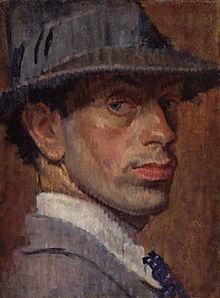
Isaac Rosenberg was one of six children born to Russian Jewish immigrants in London in November of 1890. He is known as an English poet, a Jewish poet, a war poet and a poet-painter. His career was cut short by The Great War and his body of work is thus thin. Many scholars believe the work he left behind was flawed but showed great promise had he been able to continue. Rosenberg fought in the war and was killed on April 1, 1918 in the Battle of Arras. His final poems written during his time in the fields of France have shown the potential for greatness which he was never able to fully realize.

“The tragedy of war gave [his] affinities full expression in his later poems, and as war became the universe of his poetry, the power of his Jewish roots and the classical themes became the sources of his moral vision as well as his poetic achievement.” – Thomas Staley, Dictionary of Literary Biography. Here is his poem: Break of Day In the Trenches:

Break Of Day In the Trenches

The darkness crumbles away–
It is the same old druid Time as ever.
Only a live thing leaps my hand–
A queer sardonic rat–
As I pull the parapet’s poppy
To stick behind my ear.
Droll rat, they would shoot you if they knew
Your cosmopolitan sympathies.
Now you have touched this English hand
You will do the same to a German–
Soon, no doubt, if it be your pleasure
To cross the sleeping green between.
It seems you inwardly grin as you pass
Strong eyes, fine limbs, haughty athletes
Less chanced than you for life,
Bonds to the whims of murder,
Sprawled in the bowels of the earth,
The torn fields of France.
What do you see in our eyes
At the shrieking iron and flame
Hurled through still heavens?
What quaver– what heart aghast?
Poppies whose roots are in man’s veins
Drop, and we are ever dropping;
But mine in my ear is safe,
Just a little white with dust.

Header image: Self portrait 1915, Isaac Rosenberg