Elderflower Liqueur… Yeah, skip…

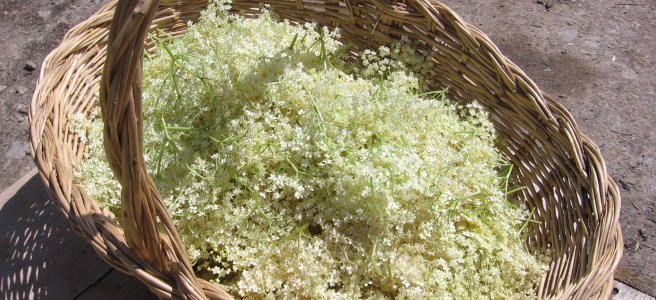
Ugh… Week 22 in the Year of Drinking Adventurously… Elderflower Liqueur.

Oh, I didn’t even try. The weekend had so many distractions. For one, my friend Tim got married on Saturday and I swear I’ve never been to a more fun wedding in my life. The music was awesome, the bride and groom were delirious, and the food was off the chart. I bought a ridiculous pair of heels, danced in them all night and woke up the next day, swearing I had stress fractures… (I don’t, I’m fine!)

I was trying to think of something fun to post instead of making something up about elderflower liqueur. It sounds like something I might enjoy…   But I’m afraid I will have to send you to Lula this week!

Promise I’ll be back next week with the booze du jour. Sorry about the fail, not…


The Mysterious Arboretum

Last year, I started writing a story for the 10-year-old daughter of a friend. With one thing and another, I never got around to finishing it. I think it’s about time I did. It gives me a light-hearted break from The Great War, too! This is different from my usual fare, so I hope you enjoy it.

Chapter One

Sandy was so excited this last Friday of school. Today was the day her class was going on a field trip. She kept checking the clock on her bedside table to see if it was time to get up. Her cat Diamond stretched out a paw and swatted at her under the covers, thinking that this restlessness surely signaled a game.

Finally, Sandy could stand it no more. The sun was finally peeking through her window shade so she threw back the covers and bounced out of bed. She had picked out her outfit the night before and laid it out across the trunk at the foot of her bed. After quickly dressing, she went to the bathroom and brushed her teeth.

“Sandy, what are doing up so early?” her mother asked from the doorway.

“Today is the day we visit the Arboretum! I was too excited to sleep.” Sandy explained. Not many ten-year-old girls were as excited as Sandy to go look and plants and trees. But Sandy wanted to be a botanist when she grew up. Visiting the Arboretum was just as exciting as going to a theme park.

She ate a quick breakfast and walked to the bus stop a full fifteen minutes early. When the bus finally came, she practically ran up the steps. Her best friend Liam had saved her a seat. Sandy chattered excitedly and Liam listened patiently. He did not share her enthusiasm for today’s field trip, beyond the fact that they didn’t have to sit in the classroom on a beautiful sunny day.

“I can’t believe you’re so excited about a bunch of stupid plants.” he grumbled.

“Plants aren’t stupid!” she cried. “We need plants to survive, dummy. They give us oxygen so we can breathe.”

“Yeah, but they’re boring.” he said in reply.

Sandy shook her head. “You wait and see, Liam. I bet you’ll change your mind after today.”

For the rest of the bus trip they talked about their summer plans. Liam’s family was going to the beach for a week in July. Sandy’s family was going to visit her cousins in Florida. Soon they arrived at their school and made their way to Mr. Vogelsinger’s classroom.

Mr. Vogelsinger might have been just as excited as Sandy to go on this field trip. He grew award winning roses, raised enough vegetables to feed a small village and regularly brought in pies his wife had baked with berries from his huckleberry bushes. He quickly took attendance and herded his students back out to the waiting bus for the trip into the city. On the way there, Mr. Vogelsinger quizzed the students about photosynthesis. Sandy raised her hand to answer every question.

“Sandy,” Mr. Vogelsinger sighed, “give someone else a chance.”

“No, let her answer. Then we don’t have to,” muttered Liam and Sandy elbowed him.

“What was that, Liam? I didn’t hear you,” Mr. Vogelsinger said, giving him the eye.

“Nothing,” Liam answered.

Eventually, they left the highway and traveled the streets leading to the center of the city. The bus driver skillfully navigated the busy traffic. On one of the streets, Sandy could see the high stone wall running the length of several city blocks and turning the corner.

“We’re here!” she cried, pulling her backpack onto her shoulders.

The bus moved slowly past the massive stone wall until finally it reached a circular driveway that ended at a set of enormous iron gates. The driver honked the horn and the gates slowly swung open, allowing them entry. Just ahead was the Visitor’s Center where the bus would drop them off and pick them up again later.

Sandy grabbed Liam’s hand. “Come on, let’s go!”

In the Visitor’s Center, every student had their hand stamped with a green leaf-shaped stamp. Besides the class, the center was empty. Sandy whispered to Liam, “They must not have many visitors this time of day.” It was, after all, early in the morning. A plump older lady gave each of the children a little map.

“Now, listen. This map is only in case you get lost or left behind. I don’t want any of you thinking you can just wander off, understand?” Mr. Vogelsinger ordered.

Just then, their tour guide arrived. He was the funniest looking man Sandy had ever seen. The round, thick lenses of his glasses, his pointy nose, and his narrow mouth, gave him the appearance of an owl. “Hello, children!” he cried. “My name is Professor Noom and I will be your guide today! Follow me! Right this way.”

Professor Noom led them through a set of doors in the back of the Visitor’s Center. When they stepped through the doors, all the children gasped.

The Spanish Flu of 1918- Research Discoveries

I’ve been researching for my story Here Lies a Soldier by reading as much as I reasonably can about the time period. Honestly, too much and I’d be ready to jump off a bridge… One part of the story involves The Spanish Flu Epidemic –albeit ever so peripherally– and I wanted to educate myself on the plague that killed some 50 million people worldwide in 1918, more than 10 times the number killed by The Great War.

Rather than ‘reinvent the wheel,’ pulling tidbits and random facts from all over the place, I am in the process of reading a book about the flu:  Living With Enza -The Forgotten Story Of Britain and the Great Flu Pandemic Of 1918.  IMG_3464

Thusly, the information I am going to share with you has been taken from this work. The author —Mark Honigsbaum— has compiled and sifted through a huge amount of data to write this book. Here are some of the things I found interesting and frankly, horrifying.

Some facts about influenza:

The term influenza most likely derives from the Italian phrase ‘influenzi coeli’ meaning ‘influence of the heavens.’ By the mid 18th century it was more common to hear the term, ‘influenzi di freddo’ or influence of the cold. It was in this sense that the term entered the English language in 1743.

Influenza viruses spread aerially, usually in small droplets expelled when someone coughs or sneezes, and tend to be more stable in cool dry conditions. Researchers have also discovered that at around 5 degrees C (41 degrees Fahrenheit) the virus transmits for about 2 days longer than at 20 degrees. A popular (and morbid) children’s rhyme of the time may actually be spot on. It goes like this:

I had a little bird
Its name was Enza
I opened the window
And in-flu-enza

The Spanish Flu in particular:

The Spanish Flu was so virulent because of its genetic makeup. There are 3 types of influenza viruses: A, B, and C. The B type produces classic winter flu while the C type rarely causes disease in humans. The A type, however, is the one responsible for the great pandemics of history. Because viruses are not cells, they do not have DNA to organize their replication. Rather, they use 8 delicate strands of RNA which codes for proteins and enzymes on the surface of the virus. Trouble arises during replication because the RNA cannot copy perfectly. Errors called ‘antigenic drift’ occur when the avian or swine strain of the virus is exchanging genes with the human host.  The result is a new subtype of the virus. Then once inside the new host, the 8 strands of RNA randomly shuffle, generating an entirely new virus for which the human immune system has no antibodies. With no defense, the virus can spread like a wild-fire.

The rate of mortality fell disproportionally on young adults, usually the least vulnerable of a population. The 1918 flu struck suddenly and without warning. One moment a person was up and about, the next day they would be lying incapacitated, coughing up greenish-yellow sputum. The final stage came when their lungs filled with fluid, prompting the heart to leach oxygen from the head and feet, resulting in a dark purple staining across the lips and cheeks of the victim.

Possible contributing factors:

The effects of gas attacks during the war.  Gasses like phosgene and chlorine were not only capable of disabling and killing on contact, they also acted as soil contaminants denying valuable ground to the enemy. In all, it is estimated that some 150,000 tons of poison gasses – the equivalent of a modern day supertanker – were dumped on the killing fields of Flanders and Northern France during the last 2 years of the war, saturating the soil to the point where it became impossible for attacking troops to hold territory without large numbers of men having to retreat to field hospitals with suppurating blisters, damaged lungs, and eyes.

The most mutagenic of all gasses – mustard gas – 12,000 tons of which was dumped on the Western Front in 1917, accounted for 400,000 casualties. According to John Oxford, Professor of virology at Queen Mary’s Medical School of London and military historian Douglas Gill: these agents may have prompted ‘stepwise mutational changes’ in the influenza virus. And in combination with the bitterly cold conditions that prevailed at the Western Front in the winter of 1917, and the stresses and strains of war, it is possible such contaminants would have lowered men’s resistance to the flu.

That is a lot of information and I’m only part way into this fascinating book. If this subject interests you at all, I recommend reading it. As I continue my research, I’ll share some more of what I learn along the way. Or if you think this is terribly boring, let me know in the comments!