The ache was deep, the chasm wide
A heart left battered, a trust betrayed
And hidden away, locked inside
A broken woman, a soul afraid
And she bravely carries on
Every night a dreamless sleep
A blackness, sweet oblivion
But every sower has to reap
A painful restitution
Her resolution falters
Drowning, gasping, clawing to the surface
Treading dark water, staying afloat
Not so easy when you think you’re worthless
So much simpler to just let go
Lost to attrition
A spark of hope, a love unexpected
Tenderness, a healing balm
Gently loved, caressed, protected
Quiet the voices, issue the calm
Blessed redemption
To take the tentative step to trust again
To give her heart and take one in return
To share a life, to risk the pain
Of a love as intense as a fire that burns
Picture this: you’re at a party, standing with a group of your friends and a lively conversation is flowing around you. You’re staring off into the middle distance and you smile to yourself. The talk turns serious as your friends begin to discuss the war in Syria, the refugee crisis and the ongoing political turmoil. They look at you in horror as you burst into laughter.
“What the hell is wrong with you?” one of them asks. “You think this is funny?”
“Er… sorry, what?” you ask, bewildered.
The Big Bang Theory, CBS Television
Welcome to the life of a writer. In your world, characters talk to you and to each other. It often keeps you awake at night. It makes your mind wander in the middle of a family gathering, a business meeting or during a class. Your family, friends, coworkers and teachers are not amused.
The thing is, that internal chatter is essential to good writing. “Hearing” the voices talking, listening to an invisible narrator spin a tale, visualizing the scene, debating the sides of an issue during conflict; that is writing, writing without committing the words to paper. Let me digress for a minute, then we’ll get back to the writing bit.
Any of these sound familiar?
You talk out loud to yourself.
You ask and answer your own questions.
You will be having a conversation inside your own head, then continue it out loud to whomever is with you, totally confusing them.
When you are concentrating on something, the house could burn down around you and you wouldn’t notice.
You LIKE being alone, not that you don’t ever want company, but you relish your quiet time without distractions (this is also an introvert characteristic*)
You are rarely bored.
Not everyone with these … um … qualities is going to become a writer, obviously. Nevertheless, possessing these ‘quirks’ has helped me muddle along this writing path. And yet, I find I’ve become a worse companion!
It’s sometimes annoying a challenge to live with a writer. Your spouse or partner can feel a little cheated when you’re not paying attention to them. (Take notice the next time you read an author’s bio or their blog ‘about’ page. A spouse/partner is so often described as ‘long suffering’, it’s almost cliche.) It can be weird when you talk about your characters as if they were real people. We went to the Philadelphia Auto Show last year and I kept pointing out the different cars my characters drive. Eventually, I found myself abandoned amidst the Porsches. And yet, *sigh* I find myself doing things like that all the time. “Hey, that’s where Tommy’s Law Office is.” “Doesn’t that look like the kind of house Leo would buy to fix up?” “I bet Graham’s band would play at this bar!”
On second thought, that does sound kinda crazy …
Anyway, the point is, if you are not having internal conversations with your characters, chances are they will be boring and one dimensional. They have to have vivid personalities (that’s not to say they all have to be outrageous, just memorable.) You have to know them intimately, their strengths, their weaknesses, their passions and their faults. Write short biographies on each of them. Create a character database in a computer file or assemble it on index cards. Even if you don’t address these traits within your narrative, their backgrounds and peculiarities will influence the way they act/react in your story. And THAT makes for good writing!
So writers, what do you talk to your characters about?
*Many people think introversion is a disorder like social phobia. However, this couldn’t be further from the truth. I asked my friend Josh Gross, who studies psychology, to explain the difference. These are his comments:
The way I’ve heard introversion/extroversion described by hard-core Jungian personality theorists is that it all comes down to where we get our energy. Extroverts get most of their energy from outside themselves; be they ideas or other people. This means they need to spend time with other people to be at their best. They may also need some time alone, but they feel the negative effects of isolation faster than introverts.
On the other hand, introverts derive most of their energy from inside themselves. They may have excellent social skills and enjoy the company of others, but being intensely social wears them out faster than extroverts. Sooner or later they need to take some time by themselves to recenter and recharge.
So introversion and social phobia are quite different. Social phobia involves a fear of social situations that is so pronounced that it interferes with one’s ability to function. Introversion simply refers to the need to spend time alone in order to be at one’s best. Introverts can be surprisingly social, as long as they are able to take breaks when they need to. They also are not immune to the damaging effects of loneliness.
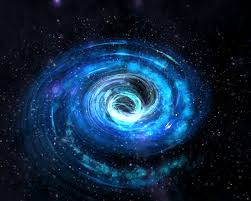
Black holes have always fascinated me. Science fiction portrays them as gateways to other universes, dimensions, etc. And while that’s impossible (or so they say 😉 ), it’s still a cool concept – using a point in space to travel extreme distances and arrive in strange new worlds. Officially, black holes are points of matter so dense that their extreme gravity doesn’t even let light escape. Is there a force in the universe powerful enough to counter the effects of such tremendous pull?
What if metaphorically, your light has slipped past the event horizon? You are too close to break free. There’s no point in fighting it. You are stretched into the tiniest of particles as the gravity rips your matter apart. From a body, to organs, to tissues, to cells, to molecules and atoms. Your atoms don’t even stand a chance. They are ripped into their components: electrons, neutrons, protons. Do they also disintegrate into even smaller particles? And all of it in an instant. Poof. You’re gone.
Have the last few weeks or month felt like this to you? Maybe it happens to you in the summertime, when sunshine and warm weather have you daydreaming about cocktails on the beach. (Um, unless you’re in the southern hemisphere, where it is summertime. In that case, double whammy!) Whatever it is, something sometime is going to pull the energy and enthusiasm right out of your proverbial mind/body, rip you into your component parts and scatter you to the wind. (Mixing metaphors, I know). (Does the period go inside or outside the parentheses? Anyone?)
What if, (still speaking metaphorically) you reach the center of the black hole, the singularity, and instead of being destroyed, antigravity pushes you out the other side? The force is equal to that which pulled you in. Your atoms coalesce, cells join into tissues and organs, your body reforms. You’re alive! Best of all, your mind is clearer and more focused than ever before. You are ready to get to work with discipline and determination. If that is true, then taking a break from the normal routine has been beneficial. Even though the time off may not have been productive, it has served a purpose. Yes, other responsibilities may have stretched you thin. But it’s over. You made it out the other side. So long black hole. Until the next time you get too close.
*Please don’t take this for a scientifically accurate article. Nothing can survive a black hole. Not even Maximillian Schell.
From “The Black Hole” 1979, starring, you guessed it, Maximillian Schell.





 Meg Sorick, Author/Artist