Old men who have foolish ideas and no self control
Old women who play the victim and sulk
Middle aged men who want to walk away
Middle aged women who live vicariously through their children
Brave young men who try to pick up the torch
Brave young women who fight for their rights
Children who have no idea what they’re in for
Babies who are innocently self absorbed
And last: the caretaker who overcharges for his services
All of them get on a speeding train
The tracks abruptly end six miles ahead
But the engineer jumps at the last minute
Preserving his life alone
The crowd observing this catastrophe
Congratulates him on a job well done
And he’s given the key to the city
Drinks on the house
As everyone turns their backs on the smoking ruin
This poem, if you want to call it that, is as close as I’ve ever come to automatic writing. You dear reader are welcome to interpret it any way you like.
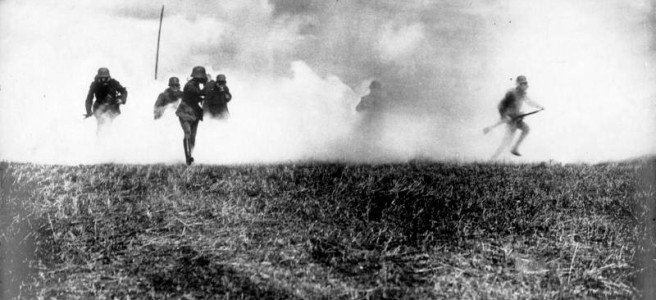
The outbreak of war in 1914 had been planned in advance for nearly twenty years. In those preceding decades, the maneuvering for power on the Continent among the players who finally declared against each other in the early days of that fateful August, had resulted in their political and military leaders preparing plans for all the potential scenarios that might arise in the case of a general European war.
Of all the plans that had been drafted, the most important of them was that of the Germans because ultimately, its execution turned a regional war into a world war. It was called The Schlieffen Plan after it’s author, Count Alfred von Schlieffen, who served as the Chief of the German General Staff from 1891 to 1906. The bulk of the plan had already been formulated by 1895. Minor modifications and what can only be called tampering, were the only changes that were made to the plan after Shclieffen’s retirement.
Count Alfred von Schlieffen
The plan went like this:
Shielffen concluded, based on the alliances formed during his tenure, that Germany would have to fight a two front war. France had allied with Russia, therefore any war involving either of those parties would inevitably drag the other into the fray. In those days the objective was to be the fastest to mobilize. The first army to get into position would ultimately be the victor, or so it was thought. Schlieffen calculated correctly that the German army would be the fastest to mobilize, with the French second fastest and the Russian army the slowest.
If Germany could rush into position, Shlieffen believed, the two front war could be avoided. With a massive push against France in the opening weeks of a confrontation, the speedy German forces could overwhelm the French before the Russians had their troops mobilized. After quickly defeating the French, they could now send the full force of the German war machine against the sluggish Russians.
For this plan to work, several assumptions were made. One, that an engaged French army would launch an attack into the region of Allsace-Lorraine– the former French regions lost to the Germans in the Franco-Prussian War of the 1870’s. This would leave the Western borders of France weak and vulnerable. The main wing of the German army would march west, drop down through Belgium (unopposed, or so they thought) and have the French forces surrounded from The English Channel on the west to the defensive forces engaging the French offensive in Alsace-Lorraine on the east. The whole thing would take no more than six weeks. Paris would be captured and the Germans could turn their attention to the Russian army on the extreme eastern front.
Shlieffen said, “Let the right-flank grenadier brush the Channel with his sleeve.”
However, for Germany to launch the massive and speedy offensive into Western France, neutral Belgium had to be invaded. The original Shlieffen plan also called for an intrusion into a small section of the Netherlands. Schlieffen had calculated (wrongly) that, despite a treaty guaranteeing Belgium’s neutrality and Britain’s promise to uphold such, the British would stand idly by while ‘little Belgium’ was violated by the massive two million man German offensive. That alone would not prove to be the only downfall of The Schlieffen Plan.
When Schlieffen retired in 1906, he was replaced by Helmuth von Moltke, nephew of the great Field Marshall Helmuth von Moltke, director of the Wars of German Unification and military counterpart of Otto von Bismarck, the political might behind the Kaiser of united Germany. The namesake did not live up to his uncle’s reputation, however. He himself acknowledged this. Reportedly confessing to a friend he said, “I lack the capacity for risking all on a single throw.” And that kind of nerve was exactly what the Shlieffen Plan demanded in order to be successful.
Shlieffen had insisted that the strength of the right wing was critical to the success of the plan. Moltke weakened that very wing by reallocating troops (unnecessarily) to strengthen the defensive position in Alsace-Lorraine. He also opted not to violate Holland’s territory as well as Belgium’s, which meant the massive German wing (three armies) was squeezed though a narrow thirty-five mile gap between the Belgian/Holland border and the Ardennes forest. This also meant they had to fight their way past Belgium’s strongest defensive position – the fort at Liege.
Long story short – the Belgian army did not roll over and let the Germans pass. They put up a hell of a fight, slowing them down and totally disrupting the aggressor’s timetables. Additionally, the British did not stand idly by and let Belgium, whom they had sworn to defend, be invaded by the German army. They quickly declared war on Germany and sent the British Expeditionary Force into the fray.
The Germans had thought the Schieffen Plan guaranteed them victory within three or four months. And what it really guaranteed was that if victory was not achieved in that time, it would not be achieved at all. The two front war they hoped to avoid was now the reality. A reality that quickly became a nightmare.
I meant to share this post by my friend Roger weeks ago because I enjoyed his illustrative description of a writing device called In Medias Res. It’s something I’d like to try as it lands you at a different point in the story than the beginning. My plan is to rework one of my existing pieces using this format to see how it works. Enjoy this piece and if you haven’t visited Roger’s blog yet, you absolutely must!
In medias res is Latin for in the middle of things or in the middle of the story. It is a device from classical literature, going back to Homer, that allows the narrator to start the tale half way through, to return to the beginning to show what has happened leading up to the current situation, then to end the tale in suitable fashion with all the necessary details now in place.
In some ways it’s a bit like the arrival of a pizza from a new pizza home delivery service. You are hungry, you make the phone call, you order the pizza, and then you sit and you wait. The doorbell rings and the dog comes rushing out of nowhere and barks at the delivery man who stands there with his delivery bag in which the pizza nestles comforting and…




 Meg Sorick, Author/Artist