Breaking Out the Blurb

Adventures in novel writing…

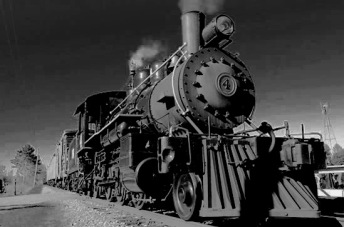
I feel like I’ve been working on Breaking Bread forever! But at last I’m finally seeing light at the end of the tunnel. As long as it’s not an oncoming train… and frankly the way the past year has been? That could very well be the case.FullSizeRender
I’ve reached that stage in novel development that I like the least — writing the synopsis, or blurb that goes on the back cover of the book and in the description on the Amazon page. How do you distill 85,000+ words down to a few sentences or a short paragraph? And write those sentences in such a way as to suck your potential readers into buying your novel? Ugh. It’s agonising!

Why is it so hard? Fellow writers, do you struggle with this part, too?

The blurb needs to convey the mystery, the suspense, the drama of the book without giving away the details or the ending. It also has to be concise and attention grabbing. I either end up with three sentences or an entire page. Finding the happy middle ground is elusive. So as I work on the blurb for my fifth novel, Breaking Bread, (and yes, I’m going with that title – more about that in another post), I rant, I rail, I stomp and I curse. That is ridiculous, right? Temperamental artist stereotype, right here! (She says throwing herself onto her Victorian fainting chair.) After I’ve had enough wallowing and whining, I get angry. What?!? Angry, you say? How does that help?do-not-keep-calm-anger-is-an-energy

This is not the path I would recommend to you all, but for me, getting angry energizes me. It sets me on fire and it feels kind of good. Maybe that makes me a dangerous psychopath, or possibly The Incredible Hulk’s previously unknown twin sister, I’m not really sure. Whatever the case, anger makes me feel alive. Once I get the frustration out of my system, I can move on, rejuvenated.

I nailed that blurb today. And if I didn’t nail it, I want you to tell me. Here it is below. All suggestions are welcome.

Breaking Bread, Book Five in the Bucks County Novels

Maya Kaminski has achieved her dream of owning a French bakery cafe, even though her family opposed her every step of the way. It hasn’t been easy, but her hard work and dedication have paid off —the business is thriving and she’s slowly getting ahead. Just as things seem to be going her way, her childhood friend, Brad Logan, moves back into town and with his recent inheritance, buys Maya’s building, intending to help her out. However, Maya is so used to relying on herself that it’s a struggle to accept help from anyone, let alone a man with whom she finds herself falling in love. When the cafe comes under attack, first by what appears to be petty mischief but quickly escalates to dangerous sabotage, Maya will need all the help she can get to save her business and her life.

(‘Keep calm’ image credit: farenheit211)

Research Notes – The Great War (4) Total War

I’m researching The Great War for my current work in progress: a historical novel set during that time. To write the period accurately, I’ve been reading and studying the war and the surrounding events. I hope you find these bits of information as interesting as I do. ~ Meg

“Wisdom is an arrow seldom used in the quiver of government.” -Historian Barbara Tuchman

The First World War was a ‘total’ war in the sense that the civilian populations and the entire economies of the warring nations were fully mobilized to support the effort. No longer was the conflict limited to fighting between professional armies. Rather, an entire generation of young men was conscripted to join the decimated troops on the frontline. It was a war of attrition, slow and deadly. The armies dug in and slaughtered each other with little ground gained, or goals achieved. The Battle of the Somme in 1916 is an example.

The battle, an offensive staged by a combined British and French force, began in July and lasted five months.  On the first day alone, the British lost 57,000 men. When all was said and done, the British and French had advanced about 6 miles (9.7 km) on the Somme, on a front of 16 miles (26 km) at a cost of 419,654 British and 202,567 French casualties, against 465,181 German casualties. Lloyd George called it, “the most gigantic, tenacious, grim, futile and bloody fights ever waged in the history of the war.”

And so it was, until it was supplanted by an even more horrific battle the following year. In July of 1917, the assault began on the village of Passchendale, in the Ypres Salient. General Douglas Haig, commander of the British Expeditionary Force (BEF), was confident he could take the village in a matter of hours by simultaneously attacking German positions. But the reality of the situation was that rains had turned Flanders into a muddy mire and thousands of men were quickly bogged down. They became sitting ducks for the German guns and died from a combination of wounds and the diseases that festered in the muck they were forced to fight and live in. At the end, Canadian forces eventually prevailed, but at the cost of a quarter million British soldiers. And for what? No German communication lines had been cut and the army’s morale was in tatters.

pdale_mud

Featured images via wiki commons.

The Great War – Research Notes (3) Plan XVII

I’m researching The Great War for my current work in progress: a historical novel set during that time. To write the period accurately, I’ve been reading and studying the war and the surrounding events. I hope you find these bits of information as interesting as I do!

Like Germany, France had also designed a plan for war far in advance of the outbreak. Their vision was to be clouded by a thirst for revenge. They were still smarting from the loss of their territories in Alsace and Lorraine in the Franco-Prussian War of the 1870’s. And with their recovery in mind, the French committed to the doctrine of the all-out offensive.

In 1911, Plan 16 was adopted. It called for the build up of troops on the Eastern borders of France, quickly followed by a straightforward drive into the lost provinces. This strategy meant the armies would have to cross the Vosges Mountains of Eastern France. The mountains, while not particularly high, are rugged and rough, and at the time, lacked much in the way of communication facilities. It would not be easy country to traverse in the rapid attempt to gain territory.

One man recognized this problem –the new Commander in Chief of the French Army, General Victor Michel. He correctly predicted that a German offensive would come through Belgium, not through the Eastern mountains. He suggested that a new plan be devised that would take the French Army northwest into Belgium to counter the anticipated German move. He was promptly fired.

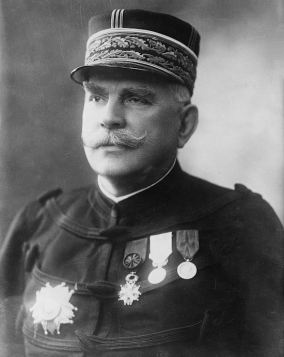
Michel was replaced by General Joseph Joffre, a large man whose best attributes were patience and a refusal to panic.

Photo_portrait_of_Gen_Joffre
General Joseph Joffre

His version of a plan for war was a modified version of Plan 16, dubbed Plan 17, and kept two armies in reserve to monitor the southern Belgian border. Despite taking a possible German incursion through Belgium into account, the French offensive would still proceed to march through Alsace-Lorraine.

Joffre had made several mistaken assumptions regarding the course of the war: he thought Russian operations would have greater impact, he thought Britain would offer more help at the outset than they did and most tragically, he assumed the Germans had far fewer troops than they did. In fact, despite the early hints that vast numbers of German troops were massing north of the Ardennes, Joffre stuck to his convictions that the enemy didn’t have the manpower to concentrate that far north.

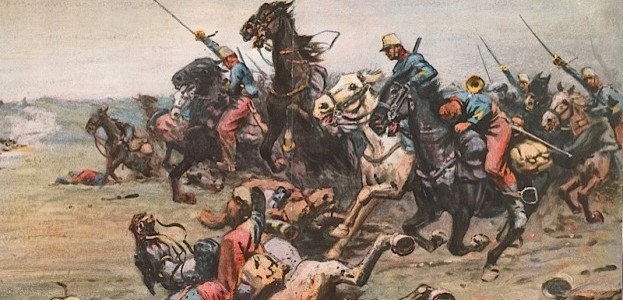
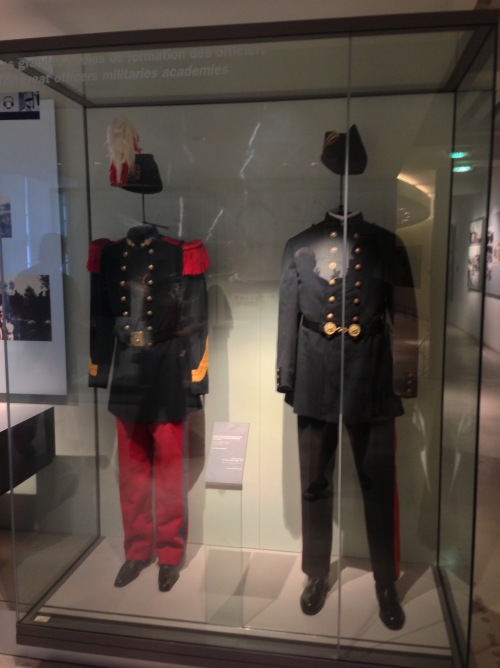
Thus it was that Plan 17 was put into action. On the Eastern offensive, the brightly uniformed French* –wearing the red trousers and navy overcoats of bygone days, their white-gloved officers with swords unsheathed leading the way– would sweep forward in long lines in perfect order. The German machine guns would open up and slaughter them.

img_0779
Photo my own – Paris Musee de Armie

This is a brief overview… there is so much more that happened in those opening days of war. I recommend for anyone interested: The Guns of August, by Barbara Tuchman and A Short History of World War I, by James L. Stokesbury. Header Image courtesy History Extra.

*The French quickly realized the folly of their hubris. Their traditional uniform had essentially put targets on their backs. The sky blue uniform which had been suggested in the years prior to the outbreak was rapidly adopted.