
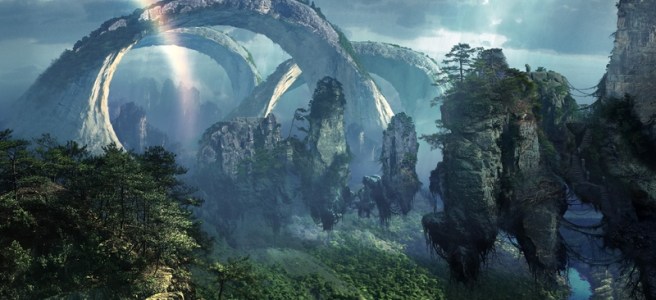
“If you send your characters on a voyage, be sure you are acquainted with the countries where their travels lead them, and spin your tales with such magic that I can identify with them. Remember that I voyage at their side wherever you send them to, and that I may know more than you and will not excuse your errors in reporting manners and costumes nor forgive a geographic blunder. …you must make your descriptions of your chosen localities authentic, or else you should stay at home. This is the only area of what you write where invention cannot be tolerated, unless the lands to which you transport me are imaginary.” – Essay on Novels, The Marquis de Sade
Another bit of good advice, no?
Setting the location for your story can be tricky business. The safest approach, of course, is to set the location in or around the area in which you live. Or if it is a ficticious locale, base it on an area with which you are intimately familiar. If you are a science-fiction or fantasy writer, the ‘world’ is your oyster. You have the power of a god to create the world of your dreams. A caution, however –be consistent. Keep extensive notes, make charts and maps. Write a ‘bible’ for your world and its inhabitants. They need a history, an origin story, and even if they are an ‘atheistic’ society, they need a set of beliefs.
Back to the ‘real’ world… Even here on Earth, extensive note-taking and chart-making are good ideas. Unless your characters are wandering through the Twilight Zone, the post office ALWAYS needs to be across from the library, not sometimes across from the pharmacy. Someone will notice. (Me, probably….) Anyway, don’t get lazy with this stuff or you’ll have a mess on your hands.
And like the Marquis so eloquently stated, “I may know more than you and will not excuse your errors… nor forgive a geopgraphic blunder.” How humiliating would it be to have a reader call you out for a glaring error publicly, either in the comments of your blog post or, even worse, within a review of your work on Amazon?
If you do send the story to a secondary locale, make sure you are also familiar with this one. And if not, for heaven’s sake do exhaustive research. The minutiae of the secondary location might not be a big deal if it isn’t relevant to the story. But the big things need to be accurate. Is there public transportation? Are there high rise buildings or quaint, clapboard houses? Forests or deserts, mountains or flatlands? How long does it really take to get from point A to point B? Someone will notice… Ahem.
Other things that can hang your story out to dry:
- Local languages and colloquialisms
- Weather, climate and seasonal changes
- Time (Things happening too quickly, for example boy meets girl they fall in love… in the span of three days. Another faux pas is messing up the flow of time, for example a character refers to something that hasn’t happened yet.)
- Cultural and religious variations among regions (even within a single nation)
- Politics and government
- Pop culture (references that can ‘date’ your story, if you want it to be ‘timeless’)
- Laws and customs (which can vary widely, even within the same country)
I constantly seek new ways to improve my skills as a writer. And thusly, I am enjoying plucking these gems of literary wisdom from the notorious de Sade. I hope, as always, you find this reminder as helpful as I did.


 Meg Sorick, Author/Artist