Research Notes – The Great War (23) Max Beckmann, Artist

“My heart beats more for a rougher, more vulgar art… one that offers access to the terrible, the crude, the magnificent, the ordinary, the grotesque, and the banal in life. Art that can always be right there for us, in the realest things of life.” Max Beckmann

Max Beckmann was born on February 12, 1884 in Leipzig, The Kingdom of Saxony, part of the newly established German Empire. He began painting as a youth, attempting to emulate the old masters, resulting in his early work following the classic, academic style. At the outbreak of war in 1914, Beckmann enlisted as a medical orderly and his experiences as such would forever change his art. Rather than continuing to paint traditional and realistic depictions, he began to distort figures and space —a demonstration of his altered view of the world and humanity within it.

In letters home, he wrote of his experiences as a medical officer, bringing the wounded to the hospitals for treatment: “…the sick lie naked on the table, often four or five of them. … With no sign of emotion, the doctors courteously show me the most horrible wounds. The sharp smell of putrefaction was hovering over everything, despite good ventilation and well-lit rooms. I was able to take it for about an hour and a half then I had to go out into the open landscape.”

Beckmann recreated this vision in his etching: The Large Operation, (1914):
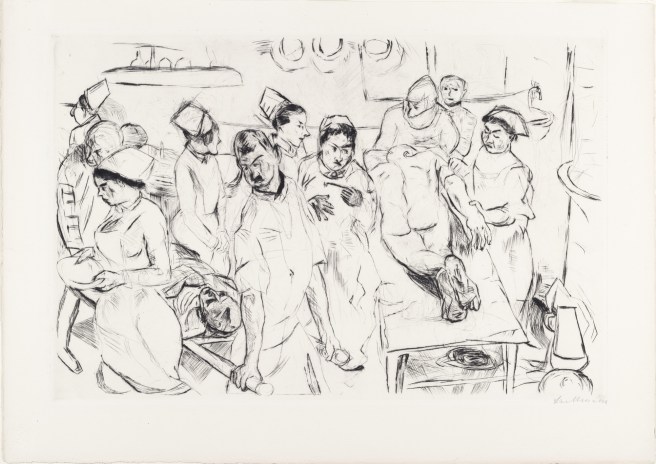
Grosse Operation, Max Beckmann 1914 (courtesy MoMa)

After his discharge from the military, he transformed his art to reflect the horrors of war. Even those works not explicitly about the war are informed by it. Now his works —crowded with figures and details— were all jagged lines, broken planes and angular forms. The effect was unsettling and claustrophobic.

An example of this style can be seen in Playing Children (1918) in which the figures of the children are compressed into a tight circle. Adding to the sense of menace, most of the children wield weapons and engage in a violent mock battle.

Spielende Kinder; Max Beckmann, 1918 (courtesy MoMa)

Beckmann became quite successful in the years after the war. Many of his paintings portrayed the cabaret culture of post war Germany and the decadence that arose during the time of the Weimar Republic.

Dancing Bar In Baden-Baden; Max Beckmann, 1923

However, things changed with the rise of the Nazis. Adolf Hitler disliked Modern Art to the extent that it was suppressed by the state. Beckmann was labeled a “cultural Bolshevik” and his work declared degenerate. In 1937, Beckmann left Germany for the Netherlands and never returned.

In 1948, he moved to the United States but his tenure as an American was to be short lived. Only months after obtaining a professorship at the Art School of New York’s Brooklyn Museum, he suffered a heart attack and died at the corner of 69th and Central Park West, not far from the apartment he shared with his wife.

Header image: Self Portrait in a Tuxedo; Max Beckmann

The Commuter

A short story by Meg Sorick.

There were five of them in the car as far as I could tell. Three squished in the back seat and two up front. I could hear the music blasting through the open windows. They all were singing along. Only teenagers could be that happy stuck in rush hour traffic. Lucky dogs.

We inched forward a little and I thought back to the summer between my junior and senior year of college. I had two jobs —both part time, both of them waitressing gigs— but it hadn’t prevented me from going out every night of the week. All my friends were doing the same kind of thing —working our summer jobs, sharing cheap apartments, surviving on Ramen noodles and thrift store clothes, so we had beer money instead. It might possibly have been the happiest time of my life.

In the car in front of me, the song changed and the kids sang louder. The old Chevy positively shook as they danced in their seats. I sighed. Where had the years gone?

Finally, thirty minutes later, the log jam broke and traffic started moving. I changed lanes and passed the concert on wheels. Stealing a glance over, I saw a snapshot of the past. Five carefree souls not worrying about a thing. Just you wait, my little darlings. Life is about to smack you in the face. Student loans, credit scores, mortgages, car payments, insurance, utilities, taxes…

I pulled in the driveway an hour and fifteen minutes after I left work. This commute was killing me. As I dropped my keys on the hall table and kicked off my shoes, I smelled the scent of tomatoes and garlic wafting from the kitchen. I followed my nose. My husband looked up from the stove when I entered. “Hey,” he said with a smile. “Kiss the cook?”

I kissed him, but I was distracted by the scene on the television in the corner. The news was on.

“Accident on the Schuylkill. Quite a mess,” my husband said.

The scene on TV was shot from a circling news helicopter. A crash. Two exits before mine.

“Lucky you were past it already,” he said. “Or you’d have been even later.”

I recognized the old Chevy. Life is about to smack you in the face…

(Header image thanks to Philly.com)

Suburban Station

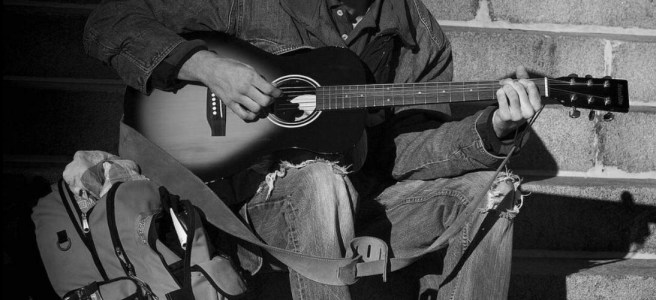
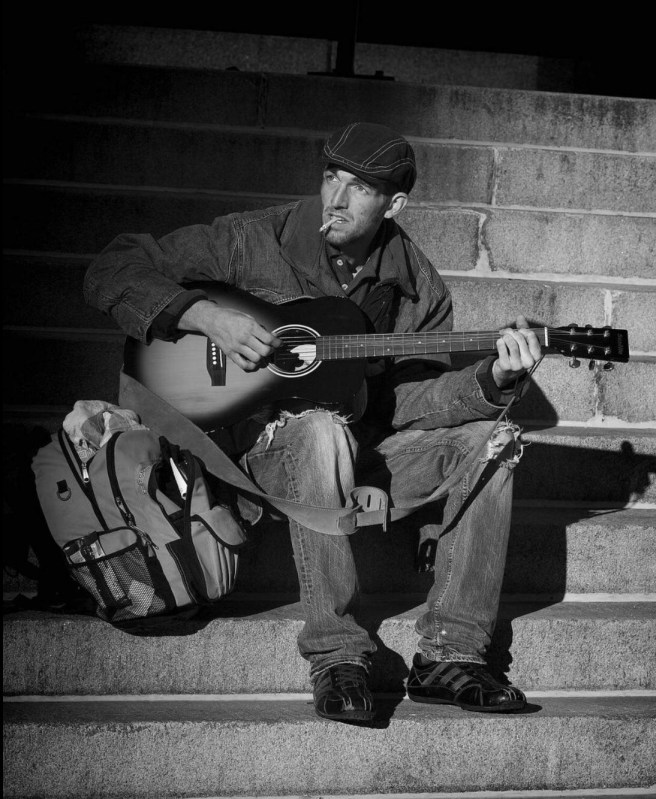
Written in response to Angela’s photo prompt for Tell the Story Challenge. Her beautiful poetry can be found at Heartbreathings. As I’m in the midst of, and bogged down on both my works in progress, I was happy to attempt this piece of short fiction as an alternative. So based on the photo below, here is my story: Suburban Station.

I was a pop superstar. I had an agent and a stage name. I got discovered at age 16 when I made the cut for Next American Star and spent most of my twenties either in the studio or on the road. I was a household name. I had all the girls I could want but I never fell in love. I had a house in California and an apartment in New York. I owned three sports cars before I even got my driver’s license.

You know what comes with that kind of life. It’s a cliche, really. Late nights, parties, booze, drugs and then other drugs the next day just so you can get up to do it all over again. And of course, the inevitable hangers-on, the leeches that form your entourage, managing your affairs so you can concentrate on being creative while they suck away your fortunes. I still have some of mine. I guess I was lucky.

It’s been two years. I’m thirty-one now but I look a lot older than that. The drugs and the pills and everything else have taken a toll. One morning, I woke up and didn’t know where I was. A hotel, yes, but what city? I had stumbled to the bathroom and puked, only to find, when I pulled my head out of the toilet, some dude sleeping in the bathtub. I didn’t recognize him. Nor did I know any of the other partiers passed out in the room. Was it even my room? I checked the closet. Yeah, those were my clothes. I had to get out of here.

I left the hotel room, found out I was in Miami, and vaguely recalled playing Hard Rock Stadium the night before. I took a cab to the airport. Tour canceled, the star is unwell. That concert was my last. I fired my manager, I sold both my homes, all my cars and hoarded what was left of my wealth.

I went home to Philadelphia and bought a small townhouse. I go by my given name. At rush hour I take my guitar to Suburban Station and play for the passengers boarding the trains. Sometimes people look at me funny –like maybe I seem familiar or something. Nobody’s ever asked. The rest of the time I volunteer to teach music in after school programs for inner city kids. That’s where I met my girlfriend, Jill. She’s a teacher, too. And she’s the only one who knows my secret. I’m not sure how long my money will hold out, but for the first time in my life I am happy.

***