
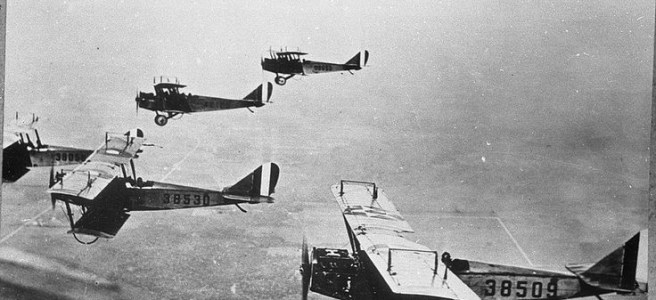
An Irish Airman Forsees His Death – W.B. Yeats

William Butler Yeats, an Irishman, a poet and one of the foremost figures of Twentieth Century Literature, served as an Irish senator for two terms, founded The Abbey Theatre and served as its chief during its formative years. In 1923 he was awarded the Nobel Prize in Literature as the first Irishman so honored, for “inspired poetry, which in a highly artistic form gives expression to the spirit of a whole nation.” He died in France in 1939 and was buried in Roquebrune-Cap-Martin. In 1948, his body was removed to Drumcliff in County Sligo. The epitaph on his grave stone is taken from one of his final poems:

“Cast a cold Eye
On Life, on Death.
Horsemen, pass by!”

During The Great War, when men still had visions of glory, Yeats composed this poem…

I know that I shall meet my fate
Somewhere among the clouds above;
Those that I fight I do not hate,
Those that I guard I do not love;
My country is Kiltartan Cross,
My countrymen Kiltartan’s poor,
No likely end could bring them loss
Or leave them happier than before.
Nor law, nor duty bade me fight,
Nor public men, nor cheering crowds,
A lonely impulse of delight
Drove to this tummult in the clouds;
I balanced all, brought all to mind,
The years to come seemed waste of breath,
A waste of breath the years behind
In balance with this life, this death.

Organize Your Writing

One of the things that can get out of hand quick when you’re writing a novel is keeping track of the details. As the story pours out beneath your fingers tapping away on the keyboard, you don’t want to have to stop and page back through the previous 10,000 words to find an important detail that’s relevant to a scene you’re currently developing. It might be things like who said what to whom, how many days have passed, does it makes sense with the way the plot is unfolding, and so forth.

I use several tools to organize my writing so as to avoid rereading the whole manuscript to find one detail. Here are a few of them:

  • Timeline spread sheet: this is essential for keeping track of the order of events. The way I do it is to decide on a date for the opening of the story, and since my books are set in present day, I usually pick a day and the date of the current year. Then for each day on which action happens, I make a brief note of the significant event. For days where nothing happens I may make an entry that reads: August 4-6 Jen waits for news from the police, or something like that.
  • Character biography database: this can be as simple as writing your character’s physical description, age, career and hobbies on an inex card. I keep mine filed on another spreadsheet. Other details that are helpful to include are personality traits. List things like he is intelligent, short tempered, bossy, meek, shy, funny, easy going, intense, artistic, serious or grumpy. You may also include events that have shaped their life so far. For example they were raised in a wealth and comfort or they were abused as a child. They lived in the city or grew up on a farm. They might have been happily married and widowed or divorced with a nasty custody battle. All this helps shape the way your characters will act and react in certain situations.
  • Pinterest boards: this is something that won’t appeal to everyone, but I like doing it. I create Pinterest boards for each of my novels and “cast actors” to “play the roles” of each character. This helps me to “see” the character perform the action in the story.
  • Mapping the location: I physically draw the layout of my locations: the town, the character’s house or apartment layouts, and so forth, again to help me visualize the scenes. And you don’t need to be an artist to make this work for you. A crude map is fine. No one else has to see it!

Keeping track of the details means you won’t be making as many mistakes along the way. This will save you a lot of time and aggravation when you begin proofreading and editing. And being able to visualize your characters and the setting of your story will help make it more real to you and that will translate into your work. As always, I hope this was helpful.