
In Plain Sight – A Short Story

People are oblivious. In my case, it was a good thing. As long as I kept up the normal routine, no one noticed that Marty had disappeared. Even after the sale sign went up in front of the house, the neighbors weren’t suspicious. “Where y’all headed?” they would ask. “Moving closer to the in-laws now that they’re getting up in years,” I’d answer. And that would be the end of it.

The human body has 206 bones, 79 organs, as well as muscle, connective tissue, and fat. Marty was a big man so he took a long time to dispose of. I started by draining the five liters of blood. It was a struggle to prop him up in the bathtub, but I’m a strong woman and the adrenaline was still pumping at that point. My hand shook as I severed the femoral artery.

After that, I separated the limbs and the head with my sharpest knife and wrapped them up in the freezer. That left the torso with it’s mass of organs and fat. I put my oven and my largest stock pots to work, cooking up a stew that fed the dogs for weeks. Still, nobody was missing Marty.

I kept the window washing business going all by myself. Sure it took a little longer now that I was doing it alone but I managed to keep our clients satisfied. “Where’s your other half?” someone would occasionally ask. “He’s off on another job,” I’d answer. And that would be the end of it.

Each time I went out —to work, to the supermarket, to grab lunch at McDonald’s, a small bag would go into the public trash can. That way, I disposed of a few of Marty’s bones at a time. They were dry and well wrapped so that no one would ever discover them in amongst the rest of the landfill debris.

It’s funny how fast I was able to recover our finances now that Marty wasn’t drinking away all our income. I was able to sell all the frivolous items he’d bought over the years too. The big screen TVs, the stereo equipment and the overpriced, underpowered “classic” Mustang he’d bought to restore. Even I knew the 90’s were a bad decade for Mustangs.

It took a full year. But it was time well spent. I slowly put everything in my name. It was easier than you might think. Even selling the house, I told the realtor my husband had to go on ahead to care for his sick parents and he’d left it all to me. It turns out you can have your contracts signed electronically which meant I could sign an approximate version of Marty’s signature for him. Nobody raised an eyebrow.

When it was done, I hauled all the furniture to an auctioneer and sold it for whatever I could. I packed the dogs and my clothes in the back of my old Jeep and drove west, not knowing where we’d land but knowing anywhere was better than here.

People are oblivious. No one ever noticed the bruises on my legs or the burn marks on my arms. Or how I kept my hair over one blackened eye or the other. For twenty years, I wished that someone would pay attention but no one ever did. Lucky for me, no one decided to start now.
The Broken Ankle, Surgery and Other Medical Adventures

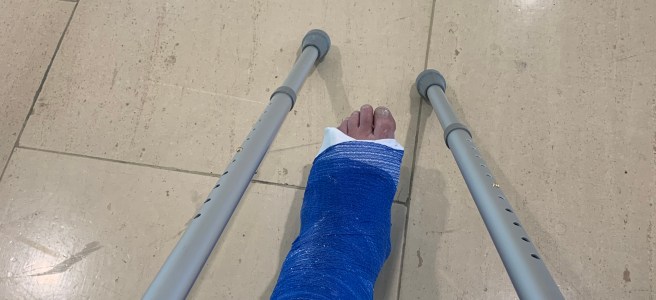
My new year is not off to a good start. Tuesday morning I fell on my stairs and broke my ankle. The ligaments were also badly damaged and I needed surgery. That happened on Thursday and they say it went well. There is a plate and some screws holding everything together in there. I have to keep my leg elevated above my heart for the next two weeks. I anticipate serious boredom. I guess that pile of reading material I have stocked up will get consumed.

When I feel up to it, I’ll tell you more of the story. The hospital experience was unique and pretty humorous at times. AND the care I’ve received has been wonderful.

Signing out from The Galway Clinic…

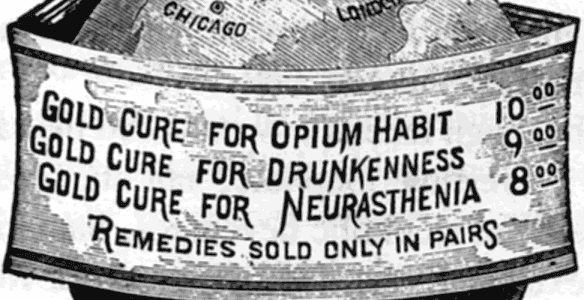
Neurasthenia – A Disease For the 20th Century

The years leading up to the Great War were a time of huge upheaval. The dizzying pace of change which preceded the outbreak of hostilities undoubtedly set the stage for that horrible conflict. The turn of the century brought with it rapid technological advancement as well as changes in the roles of women and a blurring of the previous century’s class structure. The world was shifting on its axis and a new feeling of anxiety presented itself during those times.

Neurasthenia was the name given to this new dis-ease, which affected more men than women —a surprise to the establishment, given its similarity to hysteria, which was largely viewed as a female disease. (On a side note, hysteria was an overused, misogynistic diagnosis. Have a bad day? Hysterical. Don’t feel like having sex tonight? Hysterical. A woman could be labeled hysterical for simply disagreeing with her husband’s demands. It was diabolical. Anyway…) The psychiatrists saw this nervous exhaustion as a result of the fast pace of life in the modern world. For example, with the advent of the assembly line, manufacturing was transformed from a system in which one worker saw the building or assembly of the product from start to finish to one in which the product was built or assembled by a team of workers each repetitively performing one task. The faster the process, the more machines built, the more units sold, with lower the cost to the consumer and more profits to the company. The pace could be as frenetic as the work was mind numbing.

The condition was even more common among the professional class: doctors, lawyers, judges and businessmen were finding it difficult to cope with their lives. The pressure to work hard, play hard resulted in irritability, sleep deprivation, depression, various physical pains and eventual breakdown. Those professions in which new technology was being employed suffered the greatest. Telephone operators, typesetters, railway workers, and engineers working on ever faster machines struggled to keep up. All throughout the Western World, the numbers of new diagnoses of neurasthenia rose at a frightening pace. For example, in Germany, just over 40,000 patients were registered in mental hospitals in 1870. By 1900, that number had risen to nearly 116,000 and to 220,000 by 1910. These numbers don’t include those who consulted a doctor without being admitted to hospital or those who spent time in a private sanatorium for respite. One German doctor called the illness ‘the pathological signature of the time in which we are living.’

Imagine a world where the great powers were rapidly developing their economies, competing for dominance in the colonial holdings, embracing new technologies, expanding their military might and simultaneously trying to hold on to the political systems of the past. The working classes were primed for revolution and the professional classes were having nervous breakdowns. It was a recipe for disaster and inevitably culminated in a global catastrophe like the world had never seen before.