
Vive le Cognac

Week 28 in the Year of Drinking adventurously. Cognac.

I’m back on terra firma this week. Cognac is a favorite of mine. I wouldn’t call myself a connoisseur by any means, but having been introduced to it a few years back while on winter vacation in Vermont, it’s become a staple of my inventory.

The author inserted this peculiarly French drink at this time of year in honor of Bastille Day which falls on the fourteenth. Again, summer is not exactly the season for brandy, but…  After a night out on the yacht with the chill sea breeze wafting under your silk cravat, a fine cognac will warm your cockles. (Cockles?)

Thurston_Howell,_III
Thurston J. Howell, III

Ha! Isn’t that about how you imagine a cognac drinker? That or drawing on a fine Cuban cigar while sitting in a leather wing back chair in the oak paneled library of a gentlemen’s club? Throw all of that out the window.

“Reading in bed can be heaven, assuming you can get just the right amount of light on the page  and aren’t prone to spilling your coffee or cognac on the sheets.” — Stephen King

Cognac is heavenly. As well as reading in bed. I have two cognacs on hand currently 51fffcpqPZL._SX331_BO1,204,203,200_— the Courvoisier above and Remy Martin champagne cognac. The Remy is a blend of cognacs distilled from two varietals of grapes (including champagne grapes) and is lighter on the palate than the Courvoisier. Both are VSOP cognacs. I will refer you to “the book” for the lengthy explanation but in short here’s how cognac is classified.

Cognac varieties are classified by age. VS for Very Special, aged a minimum of two years, VSOP for Very Special Old Pale, aged a minimum of four years and XO for Extra Old, which mustn’t contain a blend of anything less than six years in age. The Hors d’age category refers to “beyond age’ for even older types of XO cognacs.

Cognac is a brandy — the distilled liquor from fermented grapes– and only the best parts of specific varieties of grapes.  Just like champagne can only be called such if it originated from the Champagne region of France, cognac must come from Cognac, also a region of France. It is an ‘appellation d’origine controllee.’ In other words, it’s the law. And in case you were wondering the ‘champagne’ cognac designation is legit. I checked the Remy Martin website.

The grapes are pressed and the juice is  fermented for three weeks by the wild yeast native to the region. After fermentation, the distillation is done in traditional copper pot stills
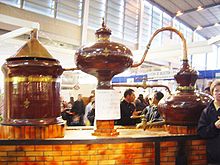
220px-Cognac_pot_still_DSC04032

Next the cognac is aged in oak casks for the specified length of time. VS, VSOP, and so forth…

How to enjoy cognac… There are a few cocktails you can make with cognac — the classic sidecar, for example. But for me, there’s just one way to drink cognac.  At the end of the day, take a snifter or a wine glass and fill it with two fingers of the cognac of your choice. Swirl. Sip. Enjoy. And if you like crawl into bed with a good book.

Now straighten that cravat, try not to drop cigar ash on the deck chairs and sashay over to see how Lovey… I mean Lula enjoyed her cognac.

Port out, starboard home – that’s right it’s posh.

And that is apropos of nothing… It’s week 26 in The Year of Drinking Adventurously! This week its port and wow, we’re halfway through the year. Well, that’s depressing…

Eh, I suppose serving port at your dinner party is a posh thing to do. If you are serving it, it comes after the meal and there’s a ritual involved. But first, what is port?

Back in the days of war between Britain and France, the British decided to quit drinking French wines. Nevertheless the thirsty population needed an alternative. Enter wine from Douros, Portugal. The trouble was that in the days of lengthy sea voyages, the wine fared badly. Thus the British had to find a way to make the wine more seaworthy. The answer? Halt the fermentation process part way through and fortify it with brandy! Which then leaves a considerably sweeter and more potent alcoholic beverage.

The port I chose to try was a tawny port. Tawny refers to the light brown, sandy color of the wine – a result of aging in barrels. Food pairings with a tawny port include brie, nuts and dark chocolate. Sounds pretty decadent, right? Also sounds better suited to a cold winter’s night if you ask me… Alas, I’m just following my guide.

The port should be served in a white wine glass. The whole idea of port having a special glass or being served in a brandy snifter is merely a marketing ploy. Oh and I mentioned the ritual…

The port should be opened and transferred to a decanter. The person with the decanter pours their own glass and then passes the decanter to the left. Don’t pour for that person, only for yourself. It’s a big faux pas to pass the bottle the wrong way and to let the decanter sit too long in front of you when your fellow drinkers are waiting to top off their glasses.

My port experience was preferable to that of my experience with sherry. Although sweet and strong, the port made a nice after dinner drink to accompany a bite of dark Belgian chocolate with hazelnuts. Nevertheless the bottle will have to wait for a chilly, rainy day to get opened again!

Go see how my posh friend Lula liked her port…


Not so very… Sherry

Week 25 in The Year of Drinking Adventurously. Sherry.

Dry Sack, it sounds like a dental issue doesn’t it? The bottle came in a drawstring jute bag – a dry sack. And it was all downhill from there…

It’s been years since I tried sherry. My mother drank it occasionally and I’m sure I sneaked a sip. Because that’s how I was as a kid… Into everything. Mom tended to choose her food and beverages based on the type of book she was reading. A novel set in Victorian times meant tea, tarts, cucumber sandwiches and sherry. I am not kidding.

Nevertheless, since my sherry sampling is so far in my hazy past, I entered this week with no preconceived notions.

Remember how awful whiskey tasted the first time you tried it? Or beer? Drinking doesn’t come to most of us automatically.  We sample, our palates acclimate, our tastes broaden and so do our horizons. And so Monday evening, with a light supper planned for dining outside, I opened my bottle of medium (not dry not sweet) blended sherry.

I bought a Spanish sherry rather than a domestic product, hoping to have a more authentic experience. Although the blending of Amontillado and Oloroso sherries may have diminished my experience somewhat.  And there weren’t a whole lot of options at my local liquor store to choose from.  So it’s entirely possible that like my initial reaction to saki, my impression of sherry might be somewhat skewed…  Because I hated it! And I’m the girl that didn’t mind grappa! I took one sip, grimaced, tried again – yes, still bad. I’m afraid this bottle is going to languish in the refrigerator until I foist it on one of my unsuspecting friends.

Now, I’m really curious to hear Lula’s impression…. And hopefully she delved into the history, etc. because I am totally skipping it. I am not hopeful for next week either. It’s port – sherry’s Portuguese cousin.